

Objective
Help homeowners and property managers identify hidden termite damage before it compromises structural wood, furniture, and flooring, and explain what actionable steps to take once early termite activity signs appear.
Key Takeaways
- Termites feed inside wood, so hidden termite damage often exists for months or years before any surface sign shows up.
- Wall cavities, subfloors, roof beams, and door frames are common hiding spots termites exploit first.
- Mud tubes, hollow-sounding wood, and discarded wings are the clearest termite activity signs to check for.
- A professional termite inspection uses moisture meters and acoustic tools to find damage invisible to the eye.
- Early termite treatment costs far less than structural repair once damage spreads.
A homeowner in Chennai once called us after noticing a small crack near a door frame. She assumed it was settling. Behind that frame, termites had been feeding for close to two years. The frame had to be replaced entirely, along with a section of subflooring.
This is how most termite cases start. Not with a swarm of visible insects, but with something small and easy to dismiss. Termites don’t announce themselves. They eat from the inside out, which means the damage is usually done long before it’s seen.
This guide walks through where termites actually cause damage, the signs that give them away early, and why a routine termite inspection matters more than most people assume.
Hidden termite damage builds up inside wall cavities, subfloors, roof beams, and furniture joints, often for months before any surface crack or sag appears. Watch for mud tubes, hollow wood, and discarded wings. A professional termite inspection can catch activity early, and prompt termite treatment costs far less than repairing collapsed wood or flooring later.
What Is Hidden Termite Damage?
Hidden termite damage is structural or cosmetic wood damage caused by termites feeding in areas not visible during normal daily use, like inside walls, under floors, or within roof framing. By the time it surfaces, the wood has usually lost significant strength.
Termites avoid light and open air. Subterranean species build mud tubes to travel between soil and wood while staying concealed. That behavior is exactly why hidden termite damage is so common in Indian homes, where humidity and wood-frame construction give colonies steady access to both moisture and food.
Where Do Termites Cause Damage You Can’t See?
Termites target wood that stays undisturbed and close to moisture. These are the spots we find damage in most often during inspections:
- Behind wall paneling and drywall – colonies travel up through wall cavities from soil contact points.
- Under flooring and subfloors – moisture from bathrooms or kitchens draws termites toward floor joists.
- Inside door and window frames – wood-to-wood contact points near the ground are easy entry.
- Roof beams and attic framing – overlooked because nobody inspects the roof structure regularly.
- Behind baseboards and skirting boards – a favorite hiding spot since they sit flush against walls.
- Inside furniture joints and cabinetry – especially built-in wardrobes and kitchen units fixed to walls.
- Crawl spaces and foundation-adjacent wood – the first stop for subterranean termites moving from soil.
Each of these locations shares one trait: low visibility and minimal foot traffic. That combination lets a colony work undisturbed for years.
What Are the Early Signs of Termite Activity?
The clearest termite activity signs show up in texture, sound, and small debris, not in obvious holes. Catching these early is what separates a quick treatment from a major repair.
- Mud tubes running along foundation walls or support beams
- Wood that sounds hollow or papery when tapped
- Discarded wings near windowsills or light fixtures after a swarm
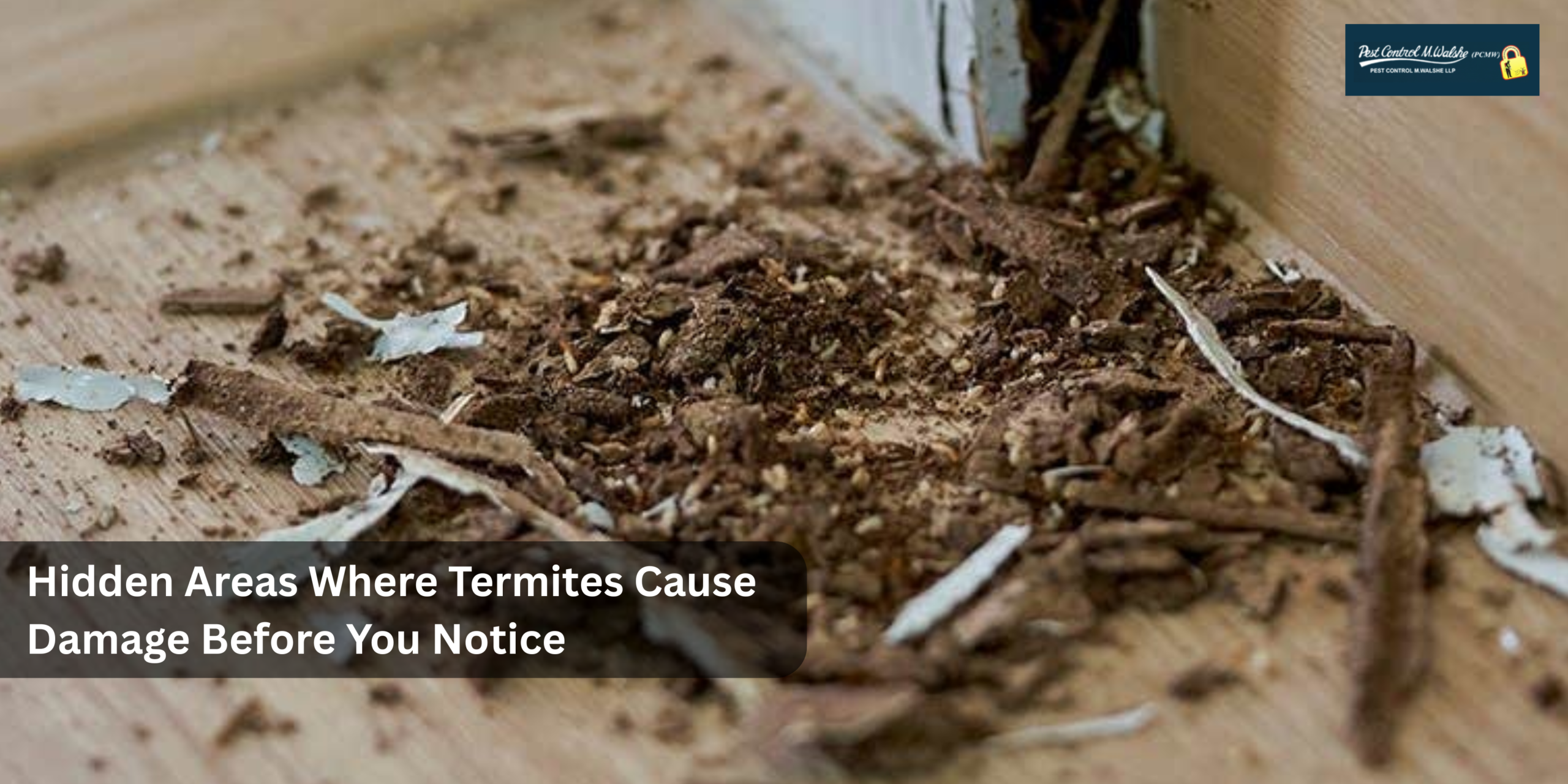
- Frass (termite droppings) that looks like small wood-colored pellets
- Doors and windows that suddenly stick or stop closing properly
- Paint that bubbles or blisters without a water leak nearby
- Floorboards that feel slightly spongy or start to sag
If two or more of these appear together, it’s worth booking a termite inspection rather than waiting to see if things get worse.
Why Does Termite Damage Go Unnoticed for So Long?
Termite damage stays hidden because colonies work from the inside of wood outward, leaving the surface layer intact until it’s almost hollow. A wall or beam can look completely normal right up until it fails under pressure.
Subterranean termite colonies also avoid exposure to open air. They build shelter tubes specifically to move without being seen, and they prefer humid, low-light spaces like crawl spaces and wall cavities. Most homeowners only find damage during renovation work, furniture moving, or after a monsoon when moisture pushes activity closer to visible surfaces.
How Often Should You Schedule a Termite Inspection?
An annual termite inspection is the standard recommendation for most homes, with more frequent checks for properties near tree stumps, damp basements, or older wood-frame construction.
Newer construction with treated soil barriers can often go longer between checks. Homes in coastal or high-humidity regions, older buildings, and properties with wooden furniture close to exterior walls should be inspected more often. A technician checks moisture levels, taps suspect wood, and inspects foundation lines for mud tubes, catching activity signs that aren’t visible during a casual walkthrough.
What Happens During Professional Termite Treatment?
Professional termite treatment combines soil-based barrier application with direct treatment of active infestation points, followed by monitoring to confirm the colony is eliminated rather than just repelled.
At PCMW, our Termi Protect service is built around this same approach — full termite treatment and management for wooden furnishings, pre-construction sites, and under-construction buildings. Since 1956, PCMW has worked on identifying, treating, and monitoring termite colonies across residential and commercial properties in India, and our “No Cure, No Pay” policy means the job isn’t considered done until the infestation actually is.
Termite Damage: Repair Cost vs Treatment Cost
Termite treatment is almost always cheaper than structural repair, because treatment addresses the colony while repair addresses damage that’s already happened.
| Scenario | Typical Cost Driver | Timeline |
| Early treatment (activity signs only) | Soil barrier, spot treatment | Days to 1–2 weeks |
| Moderate damage (localized wood replacement) | Treatment + partial carpentry | 2–4 weeks |
| Severe hidden damage (structural beams, subfloor) | Treatment + full structural repair | Several weeks to months |
The gap between the first and third scenario is usually the size of the delay between noticing termite activity signs and calling for help.
Need Professional Help with Hidden Termite Damage?
Hidden termite damage can spread quickly if left untreated, which is why timely inspections are essential. If you own a home or commercial property and suspect termite activity, scheduling a professional inspection can help detect the problem before it leads to costly structural repairs.
At PCMW, we provide termite treatment and comprehensive pest control services in Delhi for residential, commercial, and industrial properties. We also offer reliable pest control services in Ludhiana , helping property owners protect their buildings with effective termite inspection and long-term prevention solutions tailored to local conditions.
Conclusion
Hidden termite damage rarely announces itself with an obvious sign. It shows up as a sticking door, a hollow-sounding beam, or a small mud tube along a foundation wall, small details that are easy to overlook until the wood underneath is already compromised.
If you’ve noticed any of the termite activity signs covered here, don’t wait for a floor to sag or a beam to fail. Contact PCMW to schedule a termite inspection and get ahead of the damage while treatment is still simple and affordable.
FAQs
How do I know if termite damage is structural or just cosmetic?
Tap the affected wood. If it sounds hollow, feels soft under light pressure, or crumbles at the edges, the damage has likely reached the load-bearing core, not just the surface layer.
Can I treat hidden termite damage myself before calling a professional?
Surface sprays won’t reach a colony living inside a wall cavity or subfloor. DIY treatments can kill visible workers but leave the queen and colony intact, so damage continues.
Does termite damage affect home insurance claims in India?
Most standard home insurance policies in India exclude termite and pest damage, treating it as a maintenance issue rather than sudden accidental damage. Check your policy wording directly.
How long does it take termites to cause serious structural damage?
It varies by colony size and wood type, but a moderate colony can weaken structural beams within one to two years of undetected activity.
What’s the difference between subterranean and drywood termites?
Subterranean termites need soil contact and build mud tubes, while drywood termites live entirely inside wood, including furniture, without any soil connection at all.