

Objective:
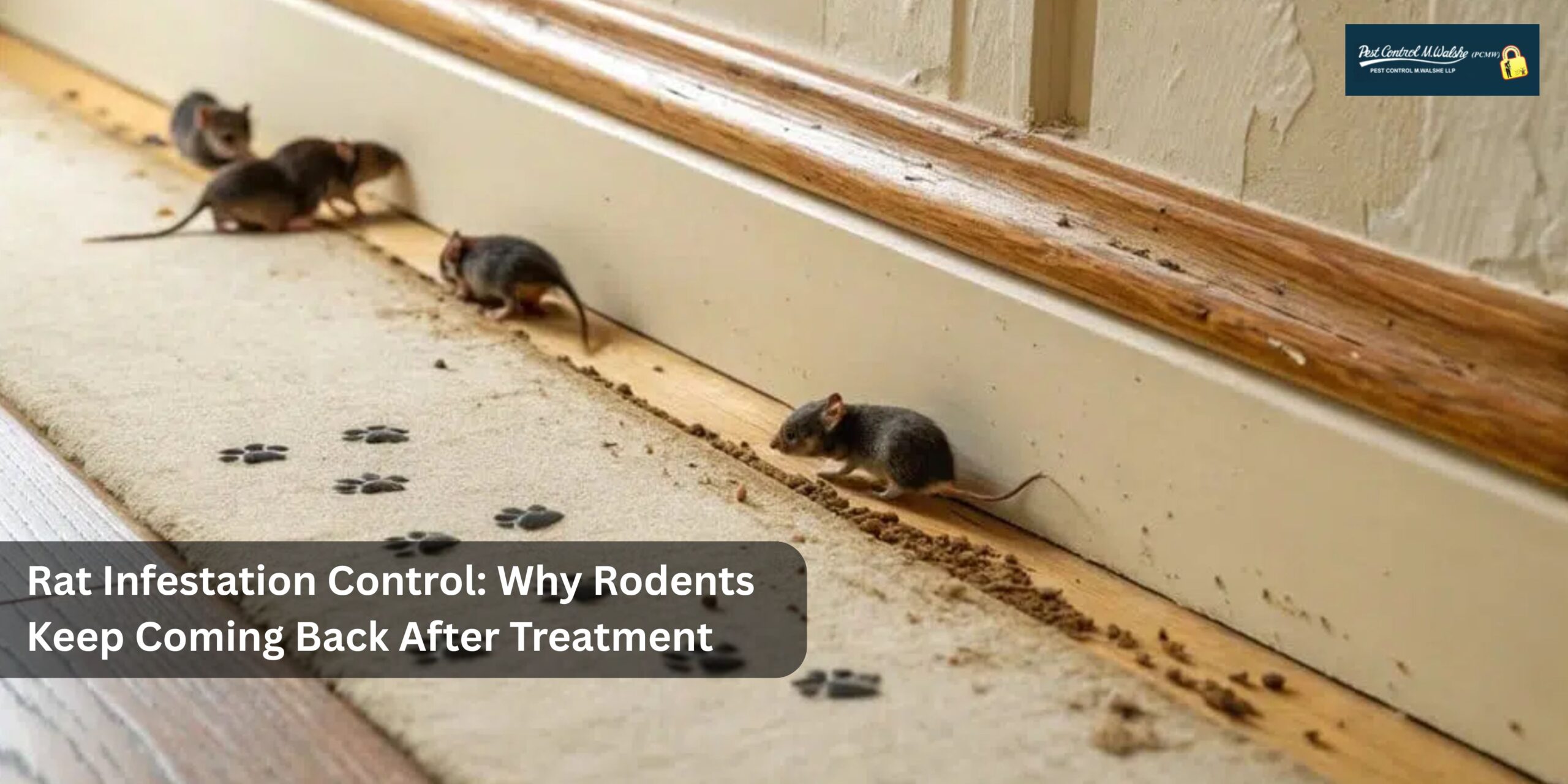
This article explains why rodents keep coming back after treatment, what actually causes a recurring rodent infestation, and how proper rat infestation control prevents repeat visits, using PCMW’s own field experience as reference.
Key Takeaways
- A recurring rodent infestation usually isn’t a failed treatment. It’s an untouched entry point or food source still active after the rats are gone.
- Rats can squeeze through a gap the width of a coin. Sealing needs to be exact, not approximate.
- Rodent prevention works best as an ongoing system, not a single visit after rats are already spotted.
- Bait stations and traps remove existing rodents. They don’t stop new ones from moving in unless entry points are sealed too.
- Seasonal shifts, construction nearby, and food storage habits all restart the cycle even after a clean removal.
- Long-term rat infestation control combines exclusion, sanitation, and monitoring, not just one round of bait.
A restaurant owner in Delhi called us six weeks after a rat treatment, convinced we’d done nothing at all. The rats were back in the storeroom, same corner, same droppings pattern.
We hadn’t done nothing. We’d removed every rat active at the time. What we hadn’t sealed, because the original job didn’t include it, was a gap under the back door where the drainage pipe passed through.
That gap is the whole story behind most repeat rodent calls. The treatment worked. The building never stopped inviting new rats in.
What Does “Removal” Actually Mean in Rodent Control?
Removal means eliminating the rodents present in a space at the time of treatment, through bait, traps, or both. It doesn’t automatically mean the space is now rodent-proof.
This distinction gets lost in how people talk about pest control. “We got rid of the rats” sounds final. In practice, it’s closer to clearing a room, not locking the door behind you.
A property with no rats today can have new ones within a week if the same conditions that let the first group in are still there. Food source, water access, and an entry point are all it takes.
Why Does a Recurring Rodent Infestation Happen So Often?
Because most treatments address the rats, not the reasons they showed up. A recurring rodent infestation almost always traces back to something structural or behavioral that never got fixed.
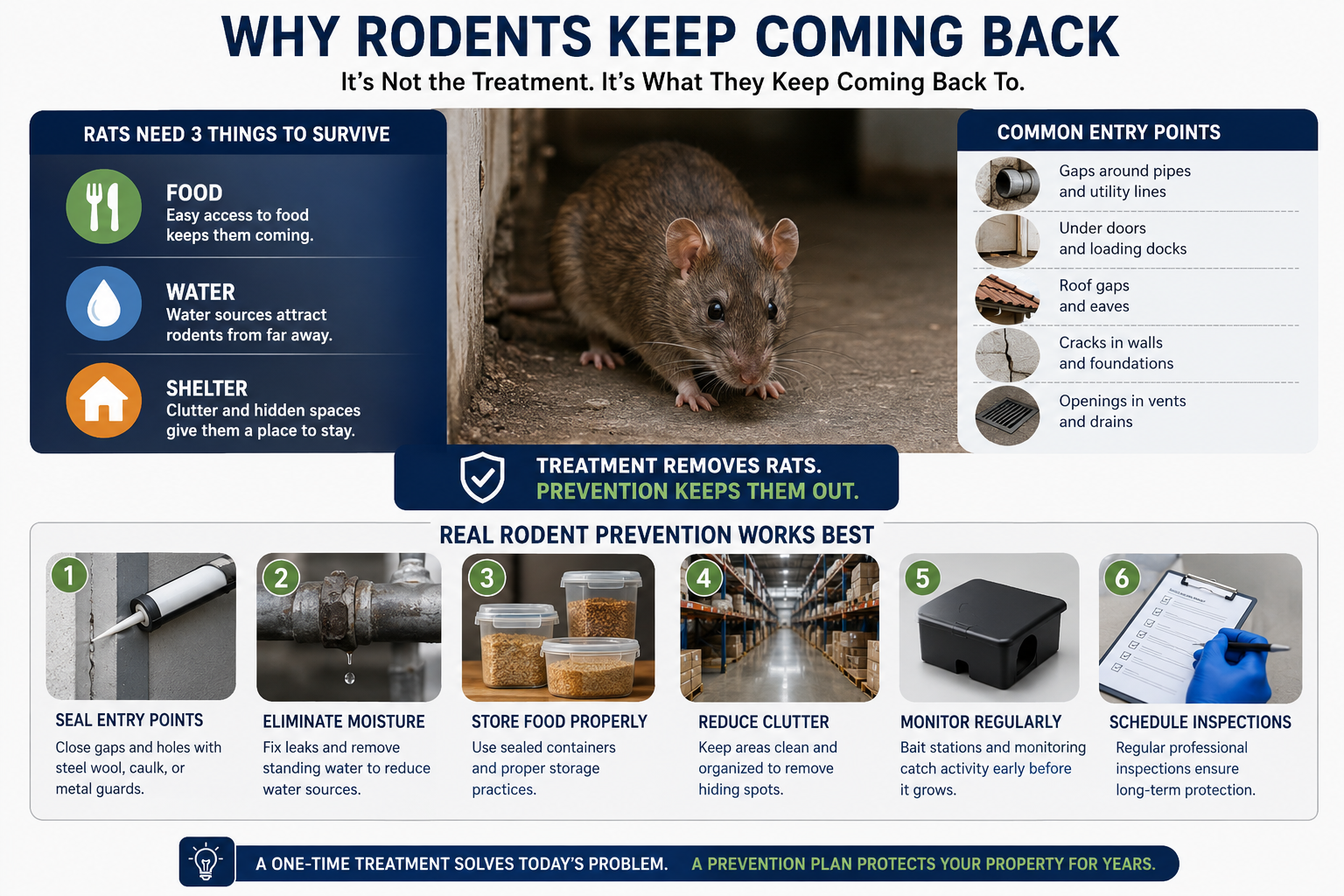
Rats are drawn to three things: food, shelter, and an easy way in. Bait and traps deal with the rats currently exploiting those three things. They do nothing about the crack in the foundation, the overflowing bin behind the kitchen, or the neighboring property with its own untreated infestation.
Warehouses and food storage facilities see this constantly. A clean bill of health after treatment gets undone within a month if incoming stock brings pests in, or if a loading dock door gets left ajar during busy hours.
What Are Rats Actually Looking For When They Come Back?
The honest answer is nothing has changed for them. If the building offered food and shelter before, it still does after treatment, unless someone actively removed those conditions.
- Food access. Exposed grain, unsealed garbage, pet food left out overnight.
- Water source. A leaking pipe or standing water near a foundation.
- Shelter and warmth. Clutter, unused equipment, wall cavities, and insulation gaps.
- An entry point. Rats need roughly a half-inch gap to squeeze through, smaller than most people assume.
None of these disappear because rats got trapped once. They stay attractive to the next rat that wanders by.
Where Do Most Re-Infestations Start?
Almost always at a point nobody checked during the original treatment. A few spots come up again and again in our fieldwork:
- Utility pipe gaps. Where plumbing or cabling enters a wall, the seal often gets overlooked.
- Loading docks and delivery doors. High traffic areas rarely stay sealed all day.
- Roof lines and eaves. Rats climb far better than most people expect, and roof gaps go unchecked.
- Shared walls with neighboring units. In commercial buildings, one untreated unit can reinfest an entire block.
- Storage areas with clutter. Boxes and unused equipment create shelter that traps and bait can’t reach.
A single missed gap undoes weeks of otherwise effective treatment. This is why PCMW’s approach to Rattus Protect includes inspection of these exact points, not just bait placement.
What Does Real Rodent Prevention Look Like?
Rodent prevention means closing the door rats used to get in, not just clearing out the ones who already walked through it. That takes a few consistent steps:
- Seal entry points with the right material. Steel wool and caulk work. Foam alone doesn’t, since rats chew through it.
- Fix moisture issues. Leaking pipes and standing water draw rodents from surprising distances.
- Store food correctly. Sealed containers, not bags, especially in warehouses and kitchens.
- Clear clutter regularly. Fewer hiding spots means fewer places for a new colony to establish.
- Schedule ongoing monitoring, not a single visit. Bait stations checked on a schedule catch new activity before it becomes a full infestation again.
This is where a lot of DIY attempts fall short. Setting a trap after spotting a rat treats a symptom. Prevention treats the reason the rat showed up in the first place.
How Much Does Ongoing Rat Infestation Control Cost?
A single removal visit costs less upfront than an ongoing prevention program, but it also solves less. Most businesses that skip prevention end up paying for repeat removal visits within a few months anyway.
An ongoing program, with scheduled inspections and sealed entry points, usually costs a modest monthly or quarterly fee. Compared against the cost of repeated emergency call-outs, or worse, stock damage in a warehouse, it’s the cheaper option over a year.
PCMW’s “No Cure, No Pay” policy reflects this thinking directly. The goal isn’t a one-time visit. It’s a result that actually holds.
One-Time Treatment vs. Ongoing Prevention Program: What’s the Difference?
| Factor | One-Time Treatment | Ongoing Prevention Program |
| Focus | Removes current rodents | Removes rodents and closes entry points |
| Duration of results | Weeks, until new rats arrive | Months to years, with regular checks |
| Entry point sealing | Often not included | Core part of the service |
| Best for | Isolated, one-off sightings | Warehouses, restaurants, recurring problem sites |
| Long-term cost | Lower upfront, higher over time | Higher upfront, lower over time |
Both have their place. A single sighting in an otherwise sealed home might need nothing more than a trap. A business with recurring activity needs the full program.
Final Thoughts
Rats don’t come back because the last treatment failed. They come back because the building still offers exactly what drew them in the first time, food, shelter, and an easy way inside.
If your property keeps seeing the same problem after every visit, PCMW’s rodent control services are built around closing that gap for good, not just clearing it out one more time.