

Objective:
Help homeowners recognise the most common monsoon pests, understand what actually draws them indoors, and take the right prevention steps before calling Pest Control M Walshe LLP for treatment.
Key Takeaways
- Monsoon pests show up because rain gives them three things they can’t get in dry months: water, warmth, and hiding spots.
- Mosquitoes, cockroaches, termites, rodents, and ants cause most rainy-season complaints across Indian homes.
- A single bottle cap of trapped water is enough for mosquitoes to lay eggs in.
- Termite damage builds quietly for months before it becomes visible, so waiting for signs usually means waiting too long.
- Basic monsoon pest control tips, like clearing drains and sealing gaps, prevent more infestations than any spray bought after the fact.
- Termite colonies and established rodent nests need professional pest control services. Home remedies rarely reach where these pests actually live.
The first proper rain of the season is usually welcome. Then, a few days later, you flick on the kitchen light and something scurries under the counter. By the following week, you’re covered in mosquito bites every evening without knowing where they’re even breeding.
Nobody plans for this, but almost every household in India goes through some version of it once the monsoon sets in. Water collects in places you forgot existed. The air indoors turns humid. And the pests that stayed out of sight all summer suddenly have exactly what they need to multiply.
None of this happens by chance. Monsoon pests follow the weather with almost mechanical predictability, and once you know what triggers them, stopping them gets a lot simpler.
Why Does Monsoon Bring So Many Pests?
Rain hands pests three things at once: standing water, constant humidity, and warm, damp shelter. That combination is close to ideal for most household pests, and it appears within days of the first real downpour.
Through the dry months, most insects and rodents are held back by one simple problem: not enough water. Monsoon removes that problem overnight. Gutters fill up and overflow. Plant saucers hold water for weeks without anyone noticing. Cracks in exterior walls stay damp long after the rain has stopped. Rats and mice, driven out of flooded burrows outdoors, start looking for dry ground indoors.
This is also the reason pests during monsoon spread faster than at any other time of year. One blocked drain pipe, left unchecked for a week, can turn into an active mosquito breeding site before you even notice it’s there.
What Are the Most Common Monsoon Pests?
Five pests account for most of the rainy-season complaints we see: mosquitoes, cockroaches, termites, rodents, and ants. Each one reacts to a different trigger, which is why one blanket treatment rarely handles all of them well.
Here’s what typically shows up, and why:
- Mosquitoes – breed in almost any amount of standing water, even a spoonful
- Cockroaches – head straight for warm, damp, dark corners like kitchen cabinets and drain pipes
- Termites – become far more active once soil and wood hold extra moisture
- Rodents – move indoors the moment outdoor burrows flood
- Ants – shift their colonies to drier, elevated spots inside the house
Learning the early signs for each one matters more than people realise. Catch a cockroach problem in its first week and it’s a five-minute fix. Miss it for a month, and you’re looking at an infestation across the whole kitchen.
Why Do Mosquitoes Explode in Number During the Rains?
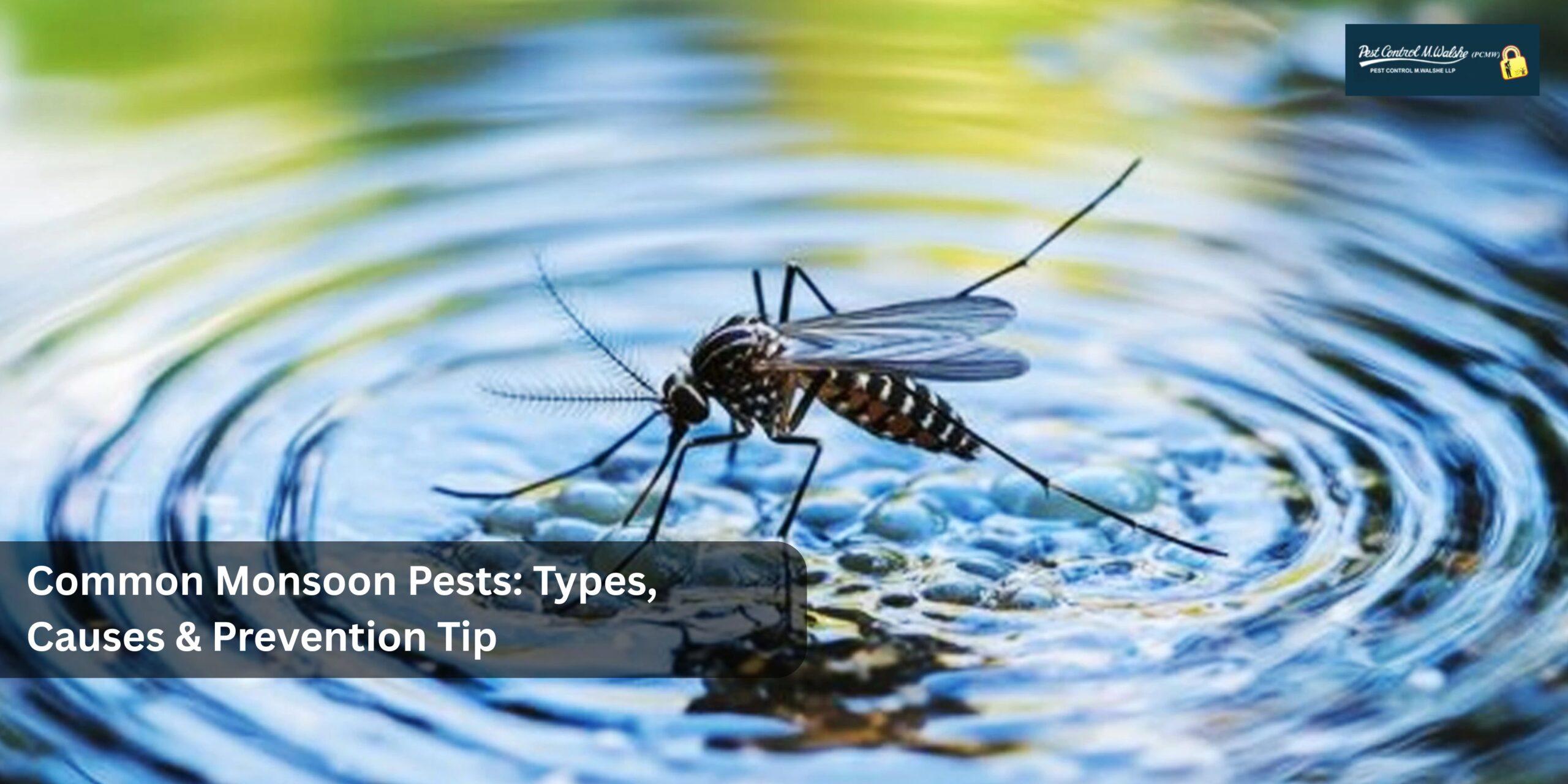
Mosquitoes multiply so fast during monsoon because their whole life cycle runs on standing water. A female mosquito needs almost nothing to lay eggs, just a shallow puddle, and those eggs can hatch within a week.
Most people check the obvious spots and miss the rest. Water quietly collects in:
- Flowerpot trays left under plants
- Roof gutters clogged with leaves after a storm
- Old tyres, buckets, or empty containers sitting outside
- Air conditioner drip trays that nobody checks
- Small puddles forming near cracked or uneven pavement
One missed container is genuinely all it takes. A single forgotten bucket can produce dozens of mosquitoes in under a week, which is why a five-minute check of your property does more good than most sprays.
The stakes go beyond itchy bites too. Mosquito numbers rising near a home also raise the risk of dengue and malaria, both of which spike predictably in Indian cities every monsoon.
Why Do Cockroaches Suddenly Appear After It Rains?
Cockroaches appear more after rainfall because heavy water flow pushes them out of drains and sewer lines, straight into homes through pipe gaps, vents, and doors left open even briefly. Once inside a warm kitchen, they have no reason to leave.
Three things pull cockroaches indoors: moisture, food residue, and dark places to hide. Monsoon hands them all three at the same time. A wet kitchen floor, one unwashed plate, or a small gap under the sink is enough of an invitation.
They breed fast once settled in. A single roach spotted in June can mean a real infestation by August if nobody deals with it. Pest Control M Walshe LLP‘s Crawling Protec service treats cockroaches, ants, and spiders together, since they tend to cluster in the same damp, cluttered corners of a home anyway.
Do Termites Really Get Worse in Monsoon?
Yes, and this is one of the most overlooked monsoon problems. Wetter soil during the rainy season makes it far easier for termite colonies to travel toward wooden furniture, door frames, and even the structural beams of a building.
Unlike cockroaches or mosquitoes, termites don’t make their presence obvious. They can work quietly for months before any real damage shows. Watch for these signs during monsoon:
- Thin mud tubes running along walls or the base of the foundation
- Wood that sounds hollow when you tap it
- Discarded wings scattered near windowsills or doors
- Furniture or frames that feel soft or crumble under light pressure
Because the damage here is structural, not cosmetic, this is one pest where “wait and see” almost never works out. Left through a full monsoon season, a termite colony can eat through beams, furniture, and flooring in ways that cost far more to fix than they would have to prevent.
Monsoon Pest Control Tips That Actually Work
Most useful monsoon pest control tips have nothing to do with chemicals. They’re about removing the exact conditions pests need to survive, which stops problems before they start.
Worth doing before the heavy rains arrive:
- Clear gutters and drains every week so water doesn’t pool on the roof or against outer walls
- Empty anything that holds water, including plant trays, buckets, and forgotten tyres
- Seal cracks and gaps around windows, doors, and pipe entry points
- Store food in airtight containers, which removes the main reason roaches and ants head into kitchens
- Fix leaking taps and pipes right away, since even a slow drip is enough moisture to attract pests
- Keep plants and bushes trimmed back from the house, since overgrown greenery traps damp air against the walls
- Inspect wooden furniture and frames for soft spots or mud tubes at the very start of the season
None of this guarantees zero pests, especially with termites or a rodent nest that’s already established. But it closes off most of the easy entry points pests rely on, and that alone prevents a lot of the calls we get every July.
When Is It Time to Call in a Professional?
Bring in a professional the moment an infestation is visible, if termites or rodents are involved, or if your own efforts haven’t worked after a couple of tries. Some problems sit below the surface, in walls or under floors, where nothing you do at home will actually reach them.
Signs it’s past the DIY stage:
- Mud tubes on the wall or wood that’s clearly been eaten into
- Cockroaches keep showing up no matter how often you clean
- Droppings or gnaw marks turning up in the kitchen or storage areas
- Mosquito bites continuing even after you’ve cleared every puddle you can find
- A treatment that worked for a while, then the pests came right back
Pest Control M Walshe LLP has been handling exactly these problems since 1956, and holds the distinction of being India’s first ISO 9001 certified pest control and fumigation company. Every job runs on a “No Cure, No Pay” policy, so the focus stays on solving the problem, not just showing up on schedule. Services like Termi Protec, Rattus Protec, and Flying Insects Protec are built specifically around the pests that spike every monsoon.
Final Thoughts
Monsoon pests don’t knock first. They move in the moment your home offers water, warmth, and somewhere to hide, and by the time you notice, they’ve usually had a head start. Catching the early signs, a puddle you missed, a damp corner, that first cockroach under the counter, saves you a much bigger problem by the time August arrives.
If prevention alone hasn’t kept things under control this season, Pest Control M Walshe LLP has spent nearly seven decades handling exactly this kind of infestation, across Mumbai, Delhi, Chennai, Kolkata, and cities nationwide. Get in touch for an inspection before monsoon pests settle in for good.
FAQs
Why do I only see pests in my house during monsoon?
Rain creates standing water and pushes indoor humidity up, and both are exactly what pests need to breed. Once the weather dries out, activity usually drops on its own, unless the infestation has already taken hold inside.
Can I stop mosquitoes without spraying chemicals everywhere?
In most homes, yes. Removing standing water stops mosquitoes at the source, before they even hatch. Sprays only kill the adults you can already see, and new ones keep coming as long as breeding spots exist nearby.
Is it normal for termites to only become visible after rain?
Fairly normal, yes. The colony may have existed well before monsoon, but wetter soil makes it easier for termites to build visible mud tubes toward wood, which is usually when people finally notice them.
How often should a home get pest control treatment during monsoon?
For most households, one inspection at the start of the season plus a follow-up if pests return covers it. Homes near open drains, construction sites, or wooded land often need to check in more frequently.
Do apartments and independent houses deal with different monsoon pests?
To some extent, yes. Apartments usually see more cockroaches and mosquitoes coming up through shared drains and common areas. Independent houses, with direct ground contact, tend to face more termite and rodent pressure.