

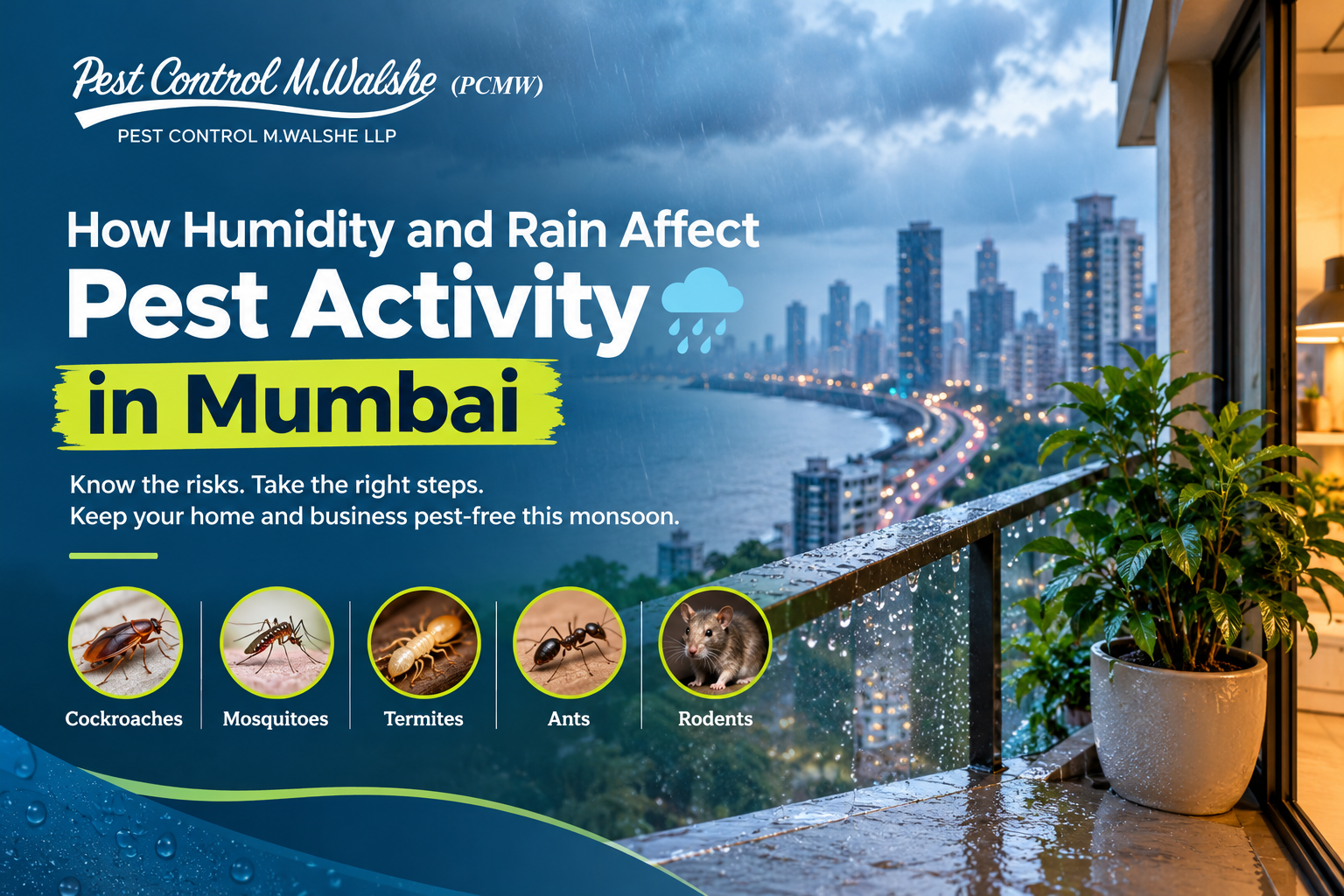
Objective: To help Mumbai residents and businesses understand why pest activity in Mumbai rises sharply during the monsoon, which pests are most likely to show up, and what practical steps reduce the risk before an infestation takes hold.
Key Takeaways
- Mumbai’s monsoon humidity (often above 85%) speeds up pest breeding cycles, especially for cockroaches, mosquitoes and termites.
- Waterlogging and clogged drains are the single biggest driver of monsoon pest problems in Mumbai, particularly mosquito breeding.
- The most common pests in Mumbai during the rains are cockroaches, mosquitoes, termites, ants and rodents.
- Rainy season pest control needs a different approach than dry-season treatment, since standing water and dampness undo most DIY efforts within days.
- Professional inspection before and during the monsoon catches termite and rodent entry points that are easy to miss from the inside.
Step outside during a Mumbai downpour and you’ll notice something besides the traffic: more bugs. More mosquitoes near the drain, more ants on the kitchen counter, more roaches near the sink after dark.
That’s not bad luck. Mumbai’s coastal humidity, combined with heavy monsoon rainfall, creates near-perfect breeding conditions for insects and rodents. A city that averages over 2,400mm of rain a year, most of it packed into four months, gives pests exactly what they need to multiply fast: moisture, warmth and shelter.
This is why pest activity in Mumbai climbs so noticeably between June and September, and why so many households only notice the problem once it’s already indoors.
Why Does Humidity Drive Up Pest Activity in Mumbai?
Humidity above 80%, common in Mumbai through the monsoon, keeps insect eggs from drying out. Cockroach eggs that might otherwise fail in dry air hatch reliably in damp conditions.
Termites rely on moisture to survive outside their colony. Damp wood, waterlogged soil near foundations and leaking pipes give them a direct route into a building. Mumbai’s older housing stock, much of it with wooden fittings and ageing plumbing, is particularly exposed.
Silverfish and booklice thrive in the same conditions. They’re rarely dangerous, but a sudden appearance in a cupboard or bookshelf usually signals trapped moisture somewhere close by.
How Does Rain Change Pest Behaviour Indoors?
Heavy rain doesn’t just create new breeding spots. It also pushes existing pest populations indoors.
- Flooded burrows: Rats and mice abandon waterlogged nests near drains and gardens, moving into buildings for dry shelter.
- Blocked drains: Standing water in gutters, terraces and society compounds becomes a mosquito nursery within days.
- Cracked walls and gaps: Ants and cockroaches use monsoon-softened plaster and expansion gaps around windows as entry points they wouldn’t normally use in dry weather.
Buildings near the coast, in low-lying areas like Sion, Kurla and parts of the western suburbs, see this shift earliest, since waterlogging there tends to be heavier and slower to clear.
What Are the Most Common Pests in Mumbai This Season?
| Pest | Why it thrives in the rains | Where it’s usually found |
| Cockroaches | Humidity speeds up egg hatching | Kitchens, drains, bathrooms |
| Mosquitoes | Breed in any standing water | Terraces, gutters, plant trays |
| Termites | Moisture draws winged alates out to colonise | Wooden furniture, window frames |
| Ants | Flooded nests push colonies indoors | Kitchen counters, food storage |
| Rodents | Flooded burrows force relocation | Basements, false ceilings, drains |
These are the common pests in Mumbai that pest control teams see most often between July and September, based on service call patterns across residential and commercial properties.
Top 5 Monsoon Pest Problems Mumbai Homes Face
- Mosquito breeding on terraces and balconies. Even a bottle cap of water left out for two days is enough for a mosquito to lay eggs.
- Termite swarms after heavy rainfall. Winged termites (“alates”) emerge in large numbers right after a downpour, looking for damp wood to start new colonies. Discarded wings on a windowsill are an early warning sign, not just monsoon debris.
- Cockroach spikes in kitchens. Sewage backflow during heavy rain often pushes roaches up through drains and gaps under sinks.
- Rodents entering through gaps and drains. Waterlogged burrows near buildings send rats searching for dry, food-rich spaces indoors.
- Damp-triggered ant trails. Sugar ants and black ants often appear in greater numbers once humidity rises past a certain point, following moisture as much as food.
These are the monsoon pest problems in Mumbai that tend to repeat every year in the same buildings, largely because the same drainage and dampness issues go unaddressed season after season.
Why Rainy Season Pest Control Needs a Different Approach
Spraying a kitchen corner or setting a few traps works reasonably well in dry months. During the monsoon, it usually doesn’t hold.
Standing water keeps replenishing mosquito breeding sites, so a single treatment gets undone within a week if drainage isn’t fixed. Damp walls dilute or wash away surface sprays faster than in dry weather. Termite colonies, once active in wet soil, need targeted treatment rather than surface spraying, since the real damage happens inside wood and walls, out of sight.
This is why effective rainy season pest control combines drainage correction, targeted treatment and follow-up inspection, not a single visit.
What Can You Do Before Calling a Professional?
A few habits reduce risk considerably, even before a professional inspection:
- Empty flowerpot trays, buckets and any open containers at least twice a week.
- Check gutters and terrace drains for blockages after every heavy spell.
- Seal visible gaps around windows, pipes and skirting boards.
- Store dry food in airtight containers, especially grains and pulses.
- Keep an eye on wooden furniture for soft spots, hollow sounds or discarded wings.
These steps won’t eliminate an existing infestation, but they slow it down and make professional treatment more effective when it does happen.
If you’re already seeing repeat activity despite doing this, it usually means the source, a leak, a blocked drain, a damp foundation, hasn’t been dealt with yet, and that’s where a proper inspection helps more than another can of spray.
When Professional Help Makes the Difference
Pest Control M. Walshe LLP (PCMW) has worked on infestation management and fumigation across Mumbai since 1956, making it one of the oldest pest management companies operating in India. It was also the first pest control and fumigation company in the country to hold ISO 9001 certification, and it works on a “No Cure, No Pay” basis, so treatment is tied to results rather than a fixed visit fee.
For monsoon-specific concerns, its Termite Protection service handles termite treatment for wooden fittings and structures, while Bed Bug Control covers infestations that flare up in damp, closed spaces. Both are relevant to buildings dealing with the kind of moisture-driven activity this season brings.
If you’re dealing with repeat pest activity every monsoon, getting proper pest control in Mumbai sorted before the rains peak is far easier than treating an established infestation in August.
Dealing with pests every time it rains? Get in touch with PCMW for an inspection before the next spell hits, and stop the same problem from coming back every monsoon.
Mumbai’s monsoon isn’t going anywhere, and neither is the pest activity that comes with it. The difference between a bad season and a manageable one usually comes down to how early the drainage and damp issues get sorted, not how much spray gets used once the problem shows up. If this season’s already brought more activity than usual, get an inspection booked before it settles in for good.
Pest Problems After Rain in Mumbai?
Don't let monsoon pests take over your property. Address dampness, drainage issues and pest entry points early with professional guidance from PCMW (PEST CONTROL M WALSHE LLP).
Explore Pest Control ServicesFAQ's
Why do I see more cockroaches in my kitchen during the monsoon?
Humidity speeds up cockroach breeding, and heavy rain often pushes them up through drains and sewage lines into kitchens. Sealing gaps under sinks and around drainpipes helps reduce this.
How can I stop mosquitoes breeding on my terrace during the rains?
Empty any container holding water, flowerpot trays, buckets, even bottle caps, at least twice a week. Standing water for more than three days is enough for mosquitoes to complete a breeding cycle.
Are termites more active after heavy rainfall in Mumbai?
Yes. Winged termites often swarm right after a downpour, searching for damp wood to start new colonies. Discarded wings near windowsills are a common early sign.
Is it worth getting monsoon pest control if I haven't seen pests yet?
Yes. Winged termites often swarm right after a downpour, searching for damp wood to start new colonies. Discarded wings near windowsills are a common early sign.
Are termites more active after heavy rainfall in Mumbai?
Yes, particularly for termite and mosquito prevention. Treating drainage and damp-prone areas before an infestation starts is usually quicker and less disruptive than treating one that’s already established.
Do DIY sprays work during the monsoon season?
They offer short-term relief at best. Rain and dampness wash away or dilute most surface treatments within days, especially for mosquitoes and termites, where the actual source needs to be addressed.