

Objective
Give Mumbai homeowners a practical, no-nonsense way to deal with cockroaches after rain, and point them toward professional cockroach pest control from Pest Control M WALSHE LLP when prevention alone isn’t enough.
Key Takeaways
- Cockroaches after rain surge indoors because flooded drains and waterlogged streets push them out of their usual hiding spots and toward dry shelter, which is often your kitchen.
- Sealing gaps around drains, pipes, and windows is the single most effective step for cockroach prevention during monsoon.
- German cockroaches breed fastest in humid kitchens, producing a new generation roughly every month if left unchecked.
- Mumbai’s older buildings and ground-floor flats near drainage lines see the heaviest cockroach activity during the monsoon months.
- DIY prevention slows an infestation. It rarely stops an established one, which is when professional pest control in Mumbai becomes necessary.
The first big monsoon downpour hits Mumbai, and within a day or two, the kitchen counter has a new tenant. Somebody switches on the light at midnight for a glass of water, and three roaches scatter toward the sink in different directions.
This isn’t bad luck or a dirty house. It’s a pattern that repeats every June across the city, and it has a straightforward explanation once you know what’s driving it.
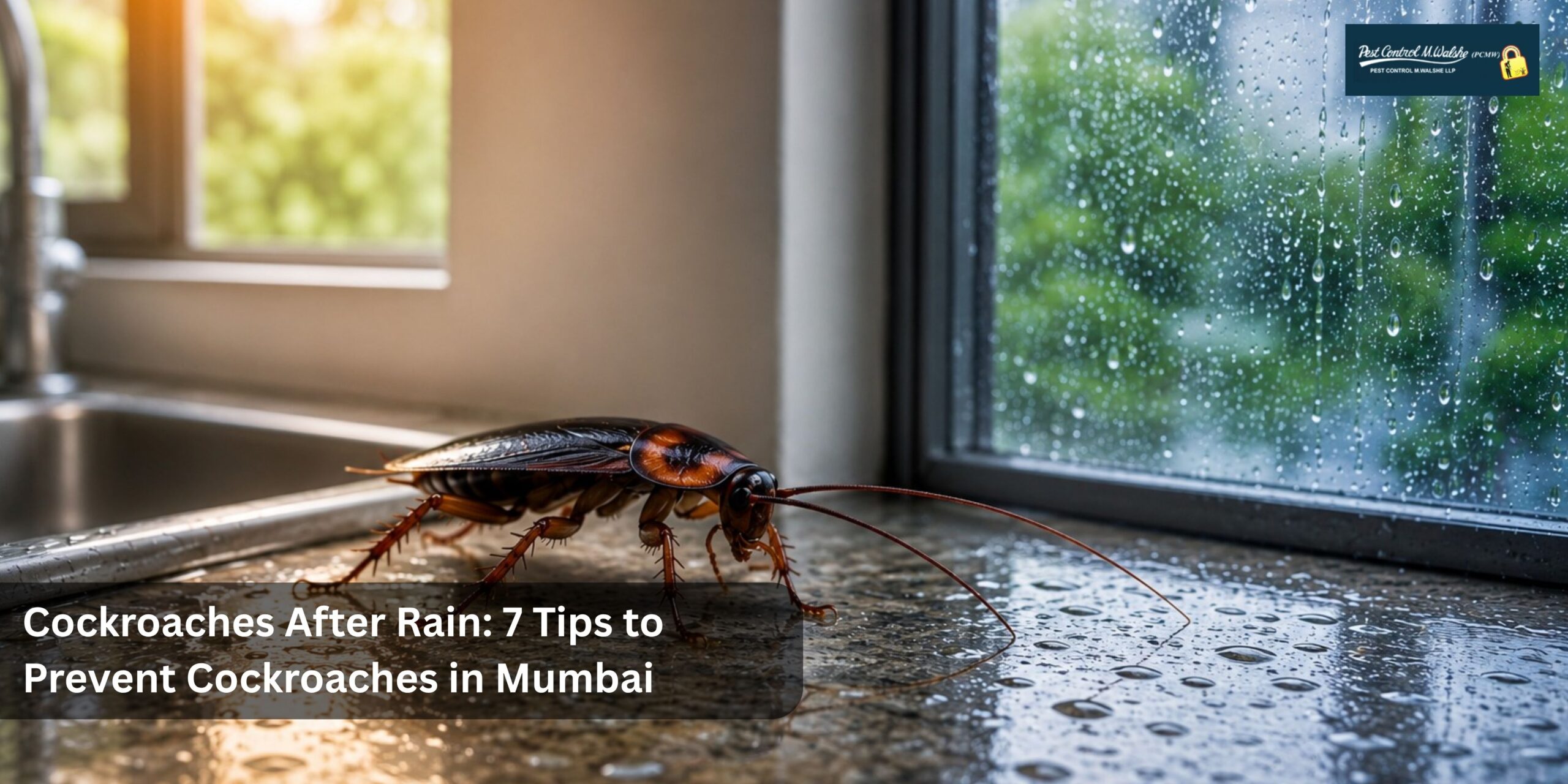
Cockroaches after rain aren’t randomly wandering in. They’re escaping flooded drains, waterlogged gutters, and soaked basements, and your kitchen looks like dry, food-rich real estate compared to what they left behind.
Why Do Cockroaches Show Up After Rain?
Heavy rain floods the underground drains and sewer lines where cockroaches normally live, forcing them to search for dry ground and a fresh food source. Kitchens fit both requirements.
Mumbai’s drainage system takes a beating every monsoon. Water backs up in gullies, chawls, and older buildings faster than it can drain out. Cockroaches that have been living quietly in these systems get pushed upward, often through the same pipes and drain openings that carry water into your home.
Once inside, they don’t leave when the rain stops. A kitchen with even a little food debris and a damp sink area gives a cockroach everything it needs to settle in and start breeding.
Tip 1: Seal Drain and Pipe Openings
Gaps around drain pipes and sink openings are the most common entry point for cockroaches during monsoon. Sealing them cuts off the easiest route into your kitchen.
Check under the sink, around the washing machine outlet, and near any exposed plumbing. A cockroach doesn’t need much space, a gap the width of a coin is enough. Use silicone sealant or steel wool packed into gaps around pipes where they enter the wall.
Floor drains in the kitchen and bathroom deserve a mesh cover if they don’t already have one. It’s a small fix that blocks one of the most direct paths inside.
Tip 2: Fix Standing Water Around the Building
Standing water near your building’s compound, drainage lines, or terrace gives cockroaches a breeding ground right next to your home. Clearing it reduces the population before it ever reaches your door.
A few spots worth checking after every heavy shower:
- Terrace drains and any flat roof areas where water pools instead of flowing off
- Compound corners where debris blocks the natural runoff path
- AC drip trays, which collect water quietly and rarely get checked
- Balcony floor drains, especially in ground and first-floor flats
Buildings near low-lying areas of Mumbai deal with this more than most, since water sits longer before draining fully.
Tip 3: Store Food in Sealed Containers
Open food containers give cockroaches exactly what they’re searching for once they’re inside. Airtight storage removes that incentive completely.
Dry goods like rice, flour, and pulses should go into containers with tight-fitting lids, not the paper or plastic bags they come in. Cockroaches can chew through thin plastic packaging without much effort.
Don’t forget pet food bowls. Leaving them out overnight is one of the most overlooked ways a kitchen stays attractive to roaches long after the rain stops.
Tip 4: Clean Behind Appliances Weekly
Grease and food crumbs collect behind the fridge, stove, and microwave faster than most people realize, and cockroaches gather exactly where cleaning gets skipped.
Pull appliances away from the wall once a week during monsoon season and wipe down the floor and wall behind them. This single habit removes both the food source and the humid, undisturbed hiding spot cockroaches prefer.
Kitchens that skip this step often deal with a cockroach problem in the kitchen for months, even after every visible surface looks spotless.
Tip 5: Manage Garbage Before It Becomes a Magnet
An uncovered kitchen bin, even one emptied daily, gives off odours that draw cockroaches in from several feet away. A sealed bin with a foot pedal lid solves most of this problem.
Take garbage out every evening rather than letting it sit overnight, especially food waste. Rinse the bin itself once a week, since residue builds up on the inside walls and keeps attracting roaches even when the bin looks empty.
Tip 6: Check Cardboard and Grocery Bags at the Door
Cockroaches and their egg cases travel inside cardboard boxes, grocery bags, and delivery packaging more often than people expect. Checking items before bringing them into the kitchen stops hitchhikers at the door.
Flatten and dispose of cardboard boxes quickly instead of storing them in a damp corner. Corrugated cardboard holds moisture and gives roaches a perfect hiding spot between shipping and unpacking.
Tip 7: Use Baits Instead of Sprays for Long-Term Control
Cockroach baits target the nest, not just the roaches you can see, which makes them more effective for actual cockroach prevention during monsoon than a can of spray.
Sprays kill on contact but do nothing for the eggs and roaches hiding inside walls or under appliances. Gel baits, placed along walls and behind appliances, get carried back to the colony and work over days rather than seconds.
For a light, early-stage problem, baits placed in the right spots can noticeably cut down activity within a week or two. For anything beyond that, professional treatment becomes the more reliable option.
When to Call a Professional for Cockroach Control in Mumbai
Call a professional once you’re seeing roaches during daylight hours, since that usually means the population indoors has outgrown the available hiding spots at night.
A few signs DIY methods aren’t going to be enough:
- Roaches visible during the day, not just at night
- A musty odour near cabinets or behind appliances, even after cleaning
- Small, dark egg cases (oothecae) found in drawers or corners
- Activity that keeps returning within days of using store-bought sprays
Pest Control M WALSHE LLP has handled monsoon cockroach infestations across Mumbai homes and commercial kitchens since 1956, working on a “No Cure, No Pay” basis. Treatment typically combines gel baiting, targeted spraying in hidden breeding zones, and follow-up checks, rather than a single spray-and-leave visit. For anyone already dealing with a cockroach pest control issue that keeps coming back, that follow-up step is usually what separates a lasting fix from a temporary one.
Conclusion
That midnight scatter across the kitchen counter isn’t just a monsoon annoyance. It’s Mumbai’s drainage system doing exactly what it does every year, and your kitchen paying the price for it.
Seven habits, done consistently through the monsoon, keep most homes roach-free without much extra effort. For the ones that don’t respond to prevention alone, Pest Control M WALSHE LLP has been solving exactly this problem across Mumbai since 1956. Get in touch with PCMW today before this year’s rain turns into next year’s infestation.
FAQs
Why do I only see cockroaches during the monsoon and not the rest of the year?
Flooding pushes them out of drains and sewer lines where they normally stay hidden. Once the ground dries out after monsoon, fewer roaches are forced to search for new shelter, so sightings usually drop.
Are the cockroaches after rain more dangerous than usual?
Not more dangerous, but the population indoors often grows faster during monsoon because of the humidity, which speeds up breeding. More roaches means a higher chance of contaminated food and surfaces.
Do ultrasonic repellents actually work against cockroaches?
Most independent testing shows limited to no real effect on cockroach behaviour. They’re not a reliable substitute for sealing entry points and using baits.
How fast can a small cockroach problem become a full infestation?
A single female German cockroach can produce hundreds of offspring within a few months under warm, humid conditions, which is exactly what monsoon weather provides. What looks minor in June can be a real infestation by August if ignored.
Is it safe to use cockroach sprays around kids and pets in the kitchen?
Most household sprays carry some risk if surfaces aren’t cleaned afterward. Gel baits placed out of reach are generally the safer option for homes with young children or pets, and professional treatments use products applied with that safety in mind.