

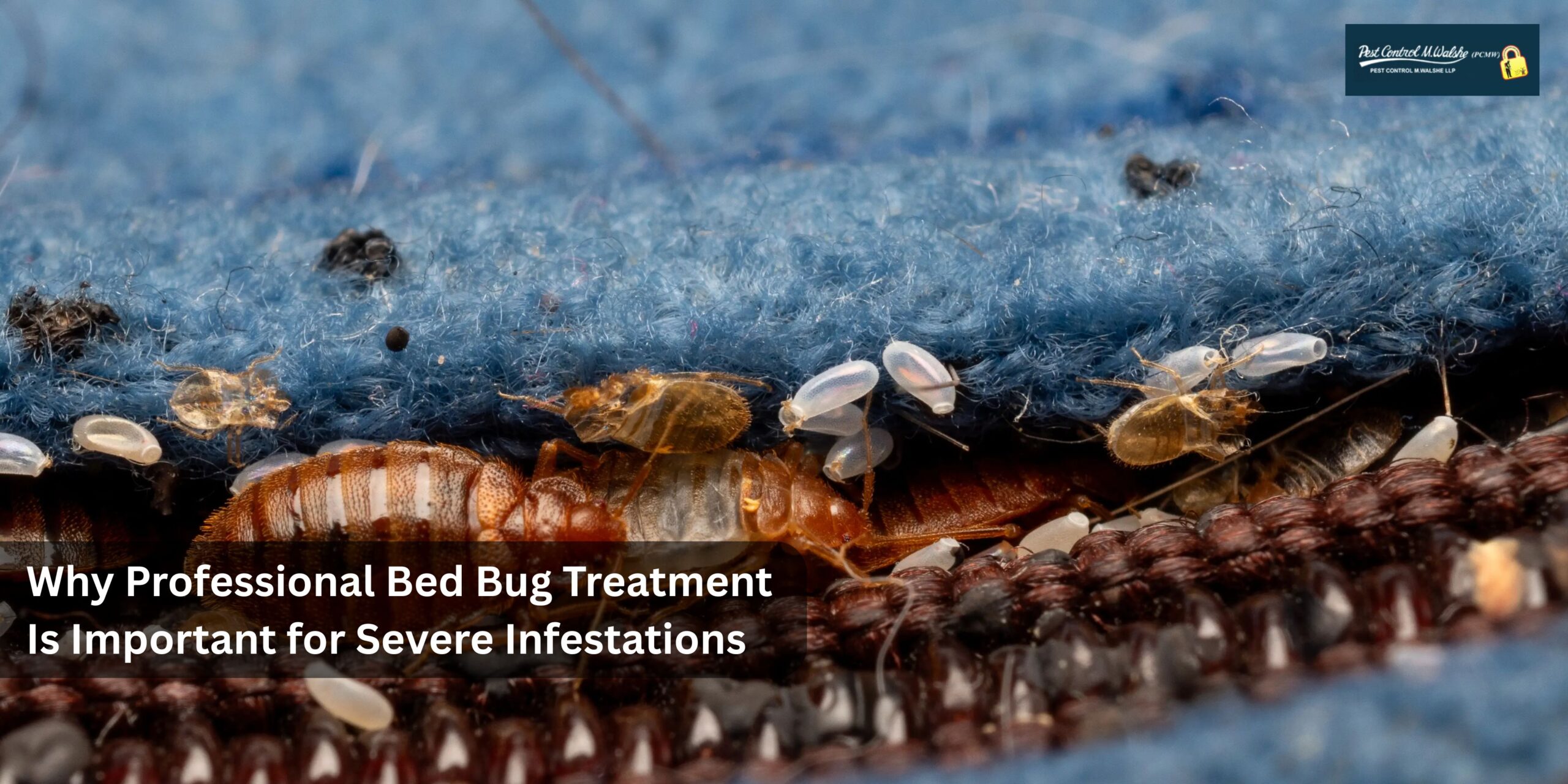
Many bed bug infestations may not seem serious at first, but they rarely remain small for long. A few itchy bites at night may not seem like a big deal, but bed bugs rarely stay in one place for long. What starts in a mattress can quickly spread to other rooms, furniture, and even clothing.
In fact, bed bugs can spread from one room to another in a short time by moving through small cracks, walls, and even on clothing or luggage, which makes early control more important.
Bed bug pest control becomes essential in severe infestations because it targets hidden bugs, removes eggs, and helps stop the problem from returning. Simple sprays or home remedies often fail once the infestation grows.
Many infestations remain unnoticed until they spread across multiple areas of the home. PCMW provides inspection and treatment services designed to identify bed bug activity and control infestations before they become harder to manage.
Blog Objective
This blog explains why severe bed bug infestations are difficult to control, how professional treatment works, and what homeowners should know to prevent the problem from spreading further.
Key Takeaways
- Bed bugs multiply quickly and spread across multiple areas of a home
- Severe infestations often involve hidden eggs and hard-to-reach spaces
- DIY methods may reduce visible bugs, but do not remove the full infestation
- Professional treatment targets all stages of the bed bug life cycle
- Early action helps reduce treatment time and limits further spread

Why Are Bed Bugs Hard to Control in Severe Infestations?
Bed bugs are small insects that can be very challenging to remove once they spread. They hide in places that are not easy to access, such as mattress seams, furniture joints, wall cracks, and behind baseboards.
As the infestation grows, bed bugs move beyond sleeping areas and begin spreading into nearby rooms. This makes it harder to control them with basic methods.
Another challenge is their life cycle. Eggs are often hidden deep inside cracks and surfaces, which means they may survive surface treatments. Once they hatch, the infestation continues.
In severe cases, bed bugs may be active in multiple areas at the same time, making complete removal more complex without proper treatment.
What Are the Signs of a Severe Bed Bug Infestation?
Early signs are often missed, but as the infestation grows, certain patterns become more noticeable.
Common signs include:
- Frequent bite marks, especially after sleeping
- Blood spots on bedsheets or pillowcases
- Dark stains or droppings on mattresses and furniture
- Bed bugs visible during the day
- Infestation spreading to sofas, curtains, or other rooms
When these signs appear together, it often indicates that the infestation has already expanded beyond a single area.
Why Do DIY Methods Fail in Severe Cases?
Many homeowners try sprays, powders, or cleaning methods to deal with bed bugs. These can help in the early stage, but they often fall short in severe infestations.
The main issue is that DIY methods focus on visible bugs. They rarely reach eggs or hidden insects deep inside furniture and walls.
This leads to repeated cycles where bugs disappear for a short time and then return.
Common limitations of DIY methods:
- Do not reach hidden areas where bugs live
- Fail to eliminate eggs
- Require repeated use with limited results
- May allow the infestation to spread further
This is why larger infestations often require more advanced solutions such as a professional bed bug removal service.
How Does Professional Bed Bug Treatment Work?
Professional treatment is designed to address the infestation at its source. Instead of focusing only on visible insects, it targets the entire population, including eggs.
The process usually involves:
- Inspection of affected areas and hidden spaces
- Identification of infestation level
- Targeted treatment of mattresses, furniture, and cracks
- Follow-up visits if needed
This is where bed bug pest control plays an important role. It focuses on removing the infestation completely rather than providing temporary relief.
PCMW offers inspection and treatment services that help identify the extent of infestation and apply methods suited to the condition of the home.
What Types of Professional Bed Bug Treatments Are Used?
Different methods may be used depending on how severe the infestation is and where it has spread.
| Treatment Type | How It Helps |
| Heat treatment | Kills bed bugs and eggs using high temperature |
| Chemical treatment | Targets active infestations in specific areas |
| Steam treatment | Reaches deep into fabric and cracks |
| Vacuuming and prep | Removes visible bugs before treatment |
Each method is selected based on the situation to ensure better results.
Why Is Professional Treatment More Effective Than DIY?
The main difference lies in how deeply the treatment reaches. DIY methods often treat the surface. Professional treatment focuses on hidden areas where bed bugs live and reproduce.
Comparison:
| DIY Methods | Professional Treatment |
| Temporary results | Long-term control |
| Misses eggs | Targets full life cycle |
| Limited reach | Covers hidden areas |
| Repeated effort needed | Structured treatment plan |
This difference becomes more noticeable in severe infestations where bugs are present in multiple locations.
When Should You Call a Professional for Bed Bug Treatment?
It is best to seek professional help when the infestation starts spreading or when repeated attempts do not solve the problem.
You should consider calling a professional if:
- Bite marks continue to appear regularly
- Bed bugs are seen in more than one room
- DIY treatments are not working
- Signs return after temporary relief
PCMW provides services that help homeowners deal with such situations before the infestation spreads further across the home.
How Does Early Treatment Help Reduce Cost and Damage?
Delaying treatment often allows bed bugs to spread into more areas. This increases the time and effort required to remove them.
Early treatment can help:
- Limit the spread to fewer rooms
- Reduce the number of treatments needed
- Protect furniture and belongings
- Lower overall treatment costs
In some situations, solutions such as home fumigation services may be required if the infestation has already spread widely.
Regular home pest control can also help prevent future infestations by identifying early signs.
Conclusion
Severe bed bug infestations are difficult to control because they spread quickly and remain hidden in multiple areas of the home. Treating only visible insects often leads to the problem returning again.
Professional treatment helps identify the full extent of the infestation and targets both bugs and eggs. This makes it more effective in stopping the problem from spreading further.
If bed bug activity continues to appear or spreads across rooms, it may be the right time to take action. PCMW offers inspection and treatment services designed to control infestations and help protect your home from further spread.
Do not let bed bugs take over your home. Schedule a professional inspection with PCMW today and take the first step toward a cleaner, more comfortable living space.