

Objective
Walk homeowners and business owners through what actually happens when a technician shows up for a professional pest inspection, so nothing about the visit feels like a mystery, and so it’s obvious when a company is cutting corners.
Key Takeaways
- A good inspection spends more time behind appliances and under sinks than in open floor space, because that’s where pests actually live.
- Thirty to ninety minutes is normal. Ten minutes means someone skipped steps.
- You should walk away with a written report, not a technician’s shrug and a verbal “looks fine.”
- Termites, rodents, and cockroaches leave completely different clues, so the same walkthrough won’t catch all three.
- PCMW has been doing this since 1956, under a “No Cure, No Pay” policy that puts the risk on us, not you.
A woman in Bandra called us last monsoon after finding a single cockroach on her kitchen counter. She’d cleaned, sprayed the usual over-the-counter stuff, and figured that was that. Six weeks later there was a trail behind the fridge, under the sink, and along the hallway skirting board.
Nothing about that infestation was new when she finally called. It had been building the whole time, just somewhere she wasn’t looking. That’s the entire point of a professional pest inspection: it checks the places you wouldn’t think to check yourself, not the places you already know have a problem.
Most people only find out what a real inspection involves after they’ve already had a bad one. This is what it should look like, so you know the difference before you’re the one calling.
- A professional pest inspection covers entry points, moisture zones, and hidden nesting areas across the whole property, not just where you’ve seen activity.
- Expect 30 to 90 minutes on-site and a written report afterward.
- Termites, rodents, and cockroaches each need a different inspection approach.
- PCMW backs its inspections with a “No Cure, No Pay” policy and decades of field experience.
What Is a Professional Pest Inspection?
Ask five people what a pest inspection is and four will describe someone glancing around a kitchen. That’s not what it’s supposed to be. A proper inspection is closer to a home audit, one that treats every room, wall cavity, and access point as a suspect until it’s cleared.
The interior gets checked room by room, with extra attention to kitchens, bathrooms, and anywhere food or water sits out. Structural elements matter just as much, wood framing, skirting boards, the foundation itself, since that’s where termites and borers do their damage long before anyone notices a problem. The exterior perimeter gets the same scrutiny: entry points, standing water, anything that gives pests a reason to nest near the building in the first place. And then there are the boring bits nobody thinks about, pipe gaps, wiring conduits, vent covers, which happen to be exactly how most pests get in.
None of this is about confirming what you already suspect. It’s about finding the thing you haven’t noticed yet, and figuring out where it’s headed next.
How Does the Pest Inspection Process Work Step by Step?
Here’s roughly how it goes, start to finish.
The technician starts by asking questions, not poking around. What have you seen, where, how often. Past pest problems matter too, since a house with a termite history five years ago behaves differently than one that’s never had an issue. That conversation shapes where the rest of the visit focuses.
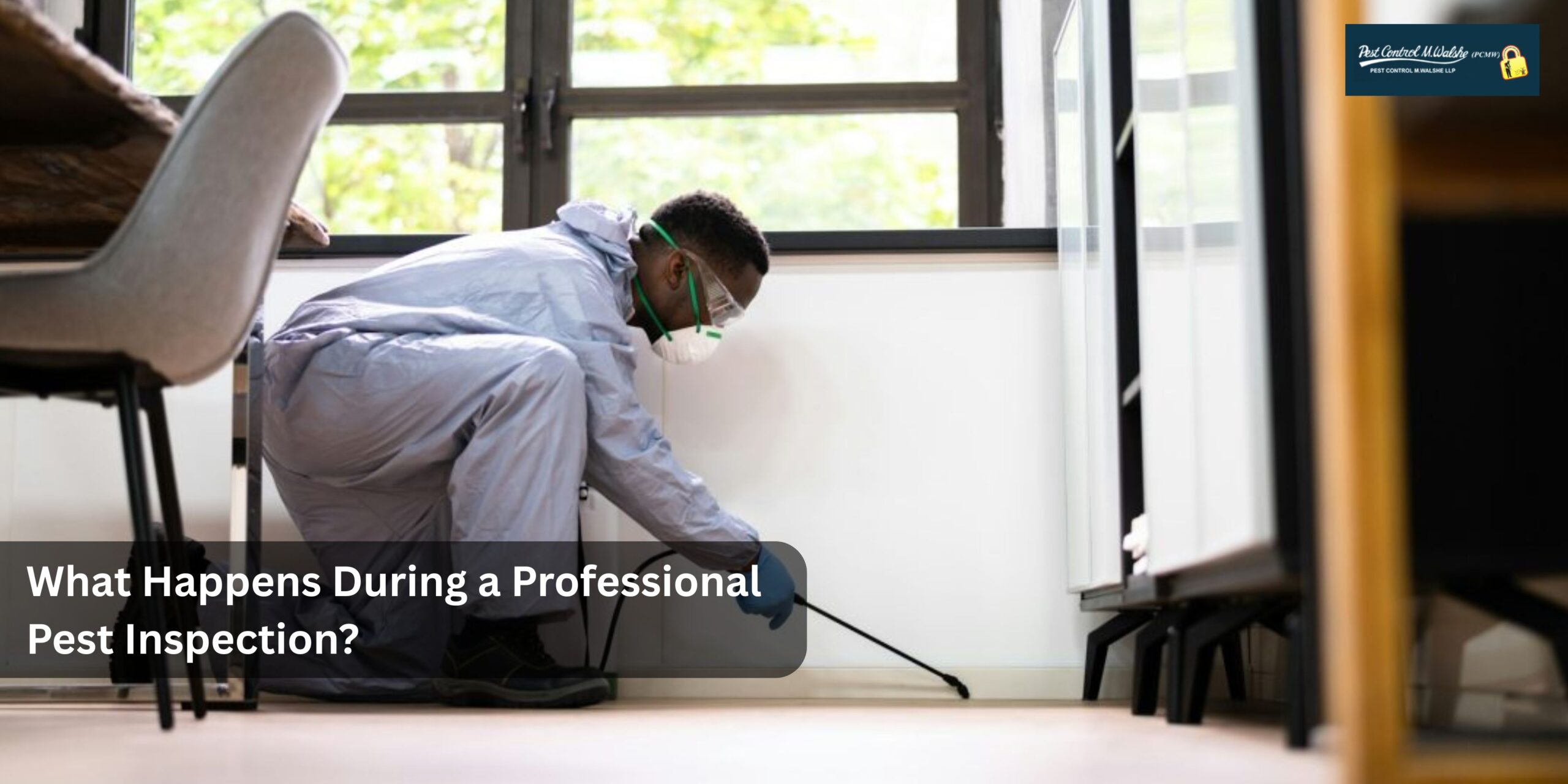
Then it’s outside first: foundation, vents, drainage, anywhere water pools after rain. Only after that does the inspection move indoors, working room by room with particular focus on kitchens, bathrooms, attics, and storage. For anything termite-related, this is where a moisture meter or probe comes out, since termite damage often looks like nothing from the outside until the wood gives way under light pressure.
Everything gets written down and photographed as it’s found. Not remembered, not summarized later from memory, recorded on the spot. That’s the step most rushed inspections skip, and it’s the one that matters most if a problem resurfaces and you need to know what changed.
The visit ends with a report: what was found, how serious it is, what to do about it. Thirty to ninety minutes total, depending on the size of the place and what’s being checked for.
What’s Included in a Standard Pest Inspection Checklist?
A serious checklist looks nothing like a five-minute glance. It covers the foundation and exterior walls for cracks or termite mud tubes, the roof and attic space for rodent entry and nesting material, and every plumbing point where moisture collects, under sinks, around water heaters, near any leak old or new.
Kitchens and food storage get checked for cockroach and ant sign. Wooden furniture and structural timber get checked for borer holes or termite galleries running through the grain. If bed bugs are on the table, bedding and upholstery get pulled apart at the seams, literally, since that’s where they hide during the day.
And drainage matters more than people expect. Standing water around the exterior is one of the most common mosquito breeding sources on a property, and it’s often the one thing a homeowner walks past every day without registering it as a problem.
Where Do Inspectors Find the Most Common Problem Areas?
Almost never in the rooms people expect. Under the kitchen sink and around the water heater, the constant low-level moisture is a magnet for cockroaches and ants, and it’s rarely checked because nobody wants to crawl under there with a torch. Wall voids and false ceilings are prime real estate for rodents and certain flying insects, precisely because they’re sealed off from daily disturbance.
Where the foundation meets the soil is where termites build their mud tubes, and those tubes are easy to miss if you’re not specifically looking down at ground level along the base of a wall. Storage rooms and cluttered corners give pests cover, so the messier a space, the longer an infestation can run before anyone notices. And balconies with AC units draw birds and nesting insects more often than most people realize.
A homeowner checking only the kitchen and living room is, in practice, checking the two rooms least likely to reveal where a problem actually started.
What Should You Look For When Choosing a Pest Inspection Company?
Experience is the first filter. Ask how long the company has been operating and whether it’s certified by anyone outside itself, ISO 9001 is one marker worth asking about specifically. A company that’s been doing this since before you were born tends to have seen every version of every problem you’re about to have.
Pricing should be clear before anyone picks up a tool, not adjusted upward once they’re standing in your kitchen. And a technician should hand you a written report at the end, not a verbal “you’re fine” on the way out the door. If they won’t put it in writing, that’s worth asking why.
Pest-specific knowledge matters more than people assume. Someone good at spotting cockroach trails isn’t automatically good at reading termite damage, the two require completely different instincts. And response time counts for something too. A company that can get someone out within 24 to 48 hours is a company that takes an active infestation seriously.
PCMW has been at this since 1956, and we’re among the earliest pest management companies in India to hold ISO 9001 certification. That track record is worth something when you’re letting someone check every corner of your home.
How Much Does a Home Pest Inspection Cost?
There’s no single number here, and anyone who quotes one over the phone without seeing the property is guessing. Size matters, obviously, a larger home or commercial space simply takes longer to go through properly. Pest type matters too. Suspected termites usually mean specialized equipment, which affects what’s charged.
Some companies fold the inspection into a free visit that leads straight into a treatment quote. Others charge for the inspection separately, which can actually be the more honest approach, since it means the findings aren’t shaped by an incentive to sell you something afterward. Urgency can add a premium as well, if you’re calling outside normal hours because something’s actively spreading.
At PCMW, the pricing is published upfront and nothing gets added once the visit is underway. That’s not a marketing line, it’s a policy we’ve held to since the company started.
Scheduled Inspection vs Emergency Call-Out: Which Do You Need?
| Factor | Scheduled Inspection | Emergency Call-Out |
| Timing | Booked ahead, flexible | Same-day or next-day |
| Best for | Routine checks, buying a property, general peace of mind | Active infestation, swarming, a sudden spike in activity |
| Depth | Full property walkthrough | Affected area first, wider check to follow |
| Typical cost | Lower, often bundled with treatment | May carry an urgency premium |
| Report turnaround | Standard | Fast-tracked, often same day |
If you’re buying a house or it’s just been a while, book the scheduled visit. If you’ve watched termite swarmers pour out of a wall or the rodent situation has clearly gotten worse overnight, don’t wait for a slot on the calendar. Call and ask for the faster option.
Conclusion
A proper inspection is the cheapest insurance you’ll ever buy against a much bigger repair bill down the line. It catches the problem while it’s still small enough to fix in one visit, instead of after it’s chewed through a wall or spread to three rooms.
If it’s been a while, or you’re already seeing something you don’t like the look of, get in touch with PCMW’s professional pest control services or reach out directly to book an inspection backed by our “No Cure, No Pay” policy.
FAQs
How long does a professional pest inspection actually take?
Usually 30 to 90 minutes. Bigger property or a termite check with moisture meter testing pushes it toward the longer end.
Do I need to be home during the inspection?
Yes, for a residential property. The technician needs to get into kitchens, bathrooms, and storage areas, and someone has to let them in and answer questions along the way.
Will the inspection damage my walls or flooring?
No. It’s all visual checks, moisture meters, probes, none of which involve cutting into anything. If treatment later requires something more invasive, that’s a separate conversation you’d agree to first.
How often should this happen?
Once a year is the general rule. If you’re in a termite-prone area or the property’s older, every six months is smarter than waiting for the annual check.
What if they find something?
You get a written report and a treatment plan, not just a diagnosis and a shrug. PCMW’s inspections always come with a clear next step, because finding a problem without a plan to fix it isn’t much use to anyone.