

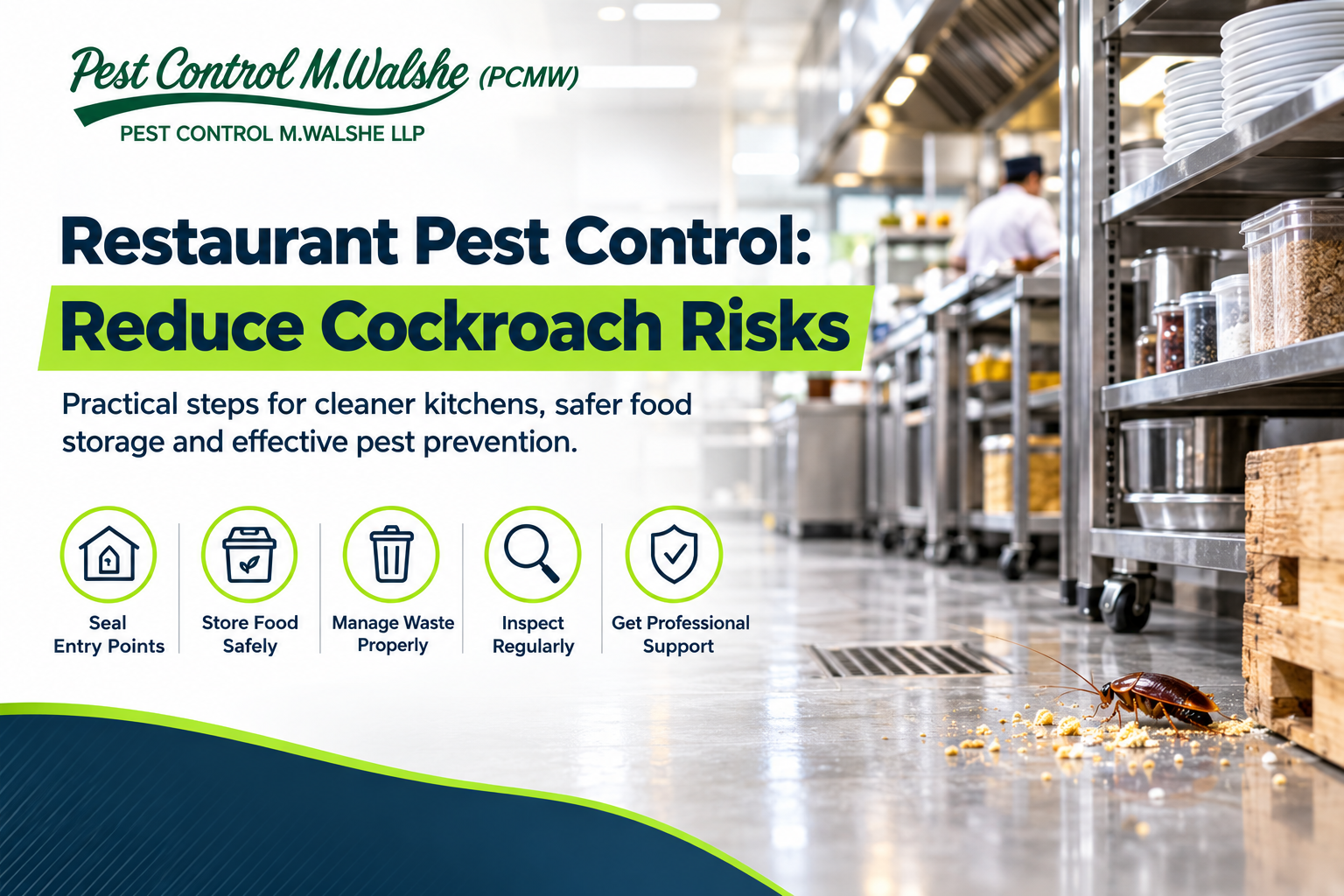
Effective restaurant pest control comes down to three things: keeping cockroaches out, leaving them nothing to eat or drink, and having trained professionals treat and record anything that gets through. A kitchen that does all three rarely ends up with a serious infestation.
Cockroaches love restaurants. Kitchens are warm, damp and full of food, with plenty of cracks to hide in. This guide covers where the risks come from, what Indian food safety rules expect, and the steps that keep a commercial kitchen clean and inspection-ready.
Key Takeaways
- Cockroaches get in through gaps, drains and deliveries, and stay because of food, water and shelter.
- Schedule 4 of the FSS (Licensing and Registration of Food Businesses) Regulations expects sealed gaps, screened openings, pest-proof food storage and written records of pesticide use.
- Daily cleaning and weekly checks of hidden spots catch problems before guests or inspectors do.
- Treatment should be done by trained professionals and never while food is being prepared.
- A pest control register with dates and products used protects you during inspections.
Why Are Cockroaches Such a Big Risk for Restaurants?
Cockroaches threaten both food safety and customer health. They can carry disease-causing germs, and their droppings, shed skins and saliva can trigger asthma in sensitive people. Restaurants give them everything they want: warmth, moisture, food scraps and tight hiding places.
The National Center for Healthy Housing notes that cockroach debris triggers asthma attacks in people who are sensitised to it. It also points out that cockroaches can carry germs that cause disease.
For a restaurant, one sighting can damage trust quickly. A guest who spots a cockroach rarely forgets it, and a food safety officer who finds one will look harder at everything else.
What Do Indian Food Safety Rules Say About Pest Control?
Schedule 4 of the Food Safety and Standards (Licensing and Registration of Food Businesses) Regulations requires licensed food businesses to keep premises in good repair so pests cannot get in. It also requires pest-proof food storage, immediate action on infestations and records of pesticides used, with dates and frequency.
The table below summarises the key clauses, based on the text reproduced in a Delhi Government food safety newsletter.
| Schedule 4 requirement | What it means in a restaurant |
| Holes, drains and access points kept sealed or fitted with mesh, grills or claddings (9.2.1) | Fill wall gaps, seal around pipes, cover drains with grates |
| Windows, doors and openings screened, with automatic closing springs on doors (2.5) | Mesh on kitchen windows, spring-loaded back and service doors |
| Food stored in pest-proof containers, above the ground and away from walls (9.2.2) | Lidded bins and containers, shelving off the floor |
| Infestations dealt with immediately, without risking food safety (9.2.3) | Act at the first sign, and cover food during treatment |
| Records of pesticides and insecticides used, with dates and frequency (9.2.3) | Keep a pest control register on site |
The same newsletter includes a pest control checklist with a few practical points. Door thresholds should leave a gap of no more than 6 mm. Insecticides should not be applied while food preparation is going on. Food should be kept covered during treatment.
Regulations get amended, so confirm the current wording with FSSAI or your licensing authority before you build your compliance file around it.
Where Do Cockroaches Hide in a Commercial Kitchen?
Cockroaches settle in dark, warm, damp places close to food. In a restaurant, that usually means under sinks, behind refrigerators and cooking ranges, around floor drains, inside wall cracks and in stacked cardboard. Checking these spots regularly shows you a problem long before guests do.
PCMW’s own cockroach control page lists similar hideouts: kitchen cabinets, spaces under sinks and washbasins, cracks in walls and bins.
| Hotspot | Why cockroaches like it | What to check |
| Under and behind sinks | Constant moisture | Leaking pipes, damp cabinets |
| Behind fridges, ranges and dishwashers | Warmth and grease | Droppings, grease build-up |
| Floor drains | Moisture and food residue | Missing covers, slow drainage |
| Cracks in walls and skirting | Shelter | Gaps, loose tiles, open pipe entries |
| Dry store and cardboard | Dark, undisturbed hiding space | Boxes left on the floor, old packaging |
| Waste area and bins | Food scraps | Uncovered bins, spills, leaking bags |
Signs of activity include small dark droppings that look like ground pepper, egg cases, a musty smell and cockroaches seen in the open during the day. A daytime sighting often means the hiding spots are crowded.
How Can You Keep Cockroaches Out of a Restaurant Kitchen?
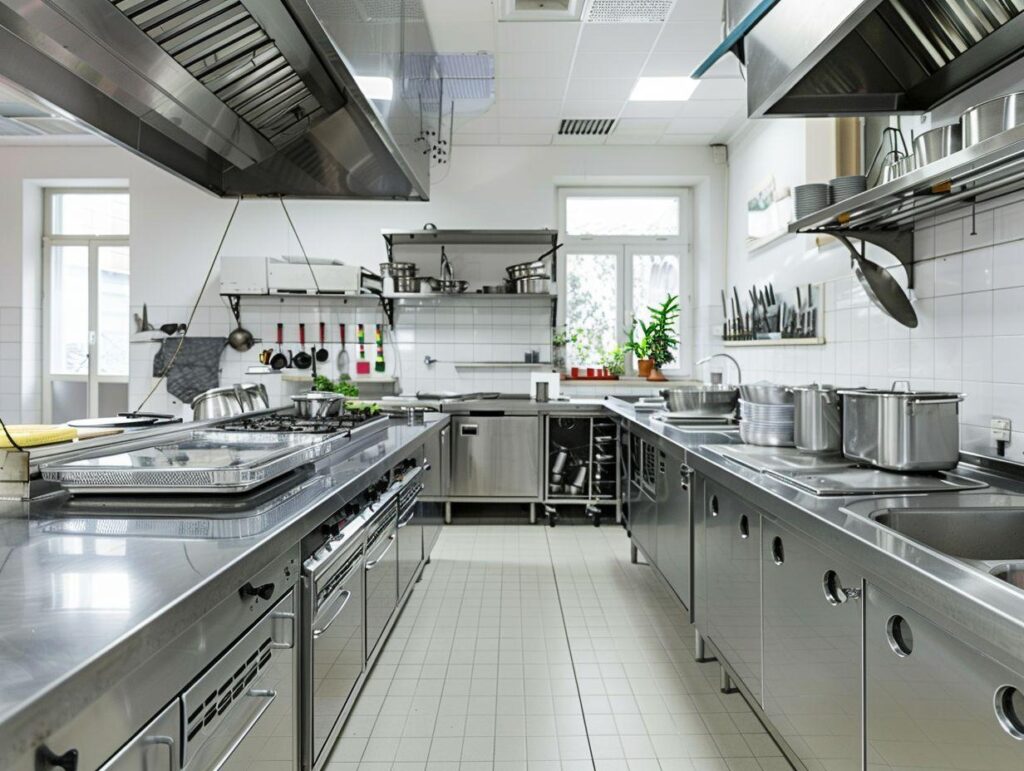
Start by closing the ways in: gaps, drains and open doors. Then remove what keeps cockroaches there, which is food, water and clutter. Finally, check deliveries and waste handling, since both bring them inside. Small daily habits do more than an occasional deep clean.
Close the Entry Points
Seal gaps around pipes, repair cracked tiles and fill holes in walls. Fit mesh screens on windows and make sure back doors close by themselves. Keep the gap under doors small, with the Schedule 4 checklist suggesting no more than 6 mm. Keep drain covers in place and in good condition.
Remove Food, Water and Shelter
Clean spills at the end of every shift, including behind equipment where grease collects. Fix dripping taps and leaking pipes, and dry sinks and floors before closing. Store dry goods in lidded containers off the floor, empty bins daily and keep their lids shut. Clear out old boxes and unused equipment, because clutter gives cockroaches somewhere to live.
Check Deliveries and Waste
Cockroaches travel in cartons and sacks. Inspect incoming deliveries at the door and remove outer cardboard before goods go into storage. Keep the waste area clean and well away from the kitchen entrance.
How Does Restaurant Pest Control Work with a Professional Provider?
A professional provider inspects the premises, finds the hiding spots, applies targeted treatment and sets up follow-up visits with written records. The aim is to treat the source while keeping food safe. Because Schedule 4 requires pesticide records, a good provider should leave you with paperwork after every visit.
Our approach follows as covering infestation identification, monitoring, sanitation, exclusion, extermination and audit or documentation. That sequence makes sense for pest control for restaurants, where inspection readiness matters as much as the treatment itself.
For cockroaches, PCMW’s Crawling Protect service uses two methods:
- Odourless gel bait. Technicians place pin-sized droplets near common hiding spots such as cabinets and sinks. Cockroaches eat the gel and carry it back to their nests, where it spreads to others. PCMW states that results show after 7 to 10 days.
- Liquid insecticides. PCMW says the effect is visible immediately. Cabinets and drawers need to be emptied first, and dishes and utensils washed before use afterwards.
PCMW also states that the products it uses are approved by the Central Insecticide Board of the Government of India. A good restaurant pest management plan should cover more than cockroaches. Kitchens also attract rats and mice, which PCMW handles through Rattus Protect, and flies, covered under Flying Insects Protect.
If your dry store holds grains, flour or packaged goods, PCMW’s pheromone monitoring helps detect stored-product insects early. It does not replace sanitation or regular treatment.
Schedule treatments after service hours when possible. Keep food covered, and wash food contact surfaces before reopening.
What Should a Commercial Kitchen Pest Control Routine Look Like?
A workable routine splits the job into daily kitchen habits, weekly inspections and scheduled professional visits. Staff handle the first two. The provider handles the third. Together they give you early warning, fast action and a paper trail.
| Frequency | Who | Tasks |
| Daily | Kitchen team | Clean spills, wipe surfaces, empty bins, dry floors, cover food, store goods off the floor |
| Weekly | Manager or supervisor | Check hotspots with a torch, inspect drain covers and door seals, review storage areas, note any sightings |
| As scheduled | Pest control provider | Inspect, treat, update the register, report findings and recommend fixes |
The Schedule 4 text quoted above does not set a fixed treatment frequency, so the schedule depends on your kitchen. PCMW’s service pages say gel treatment can last from 3 to 6 months or more, depending on the site. They add that humid coastal cities may need earlier repeat treatment. They also describe yearly contracts with four quarterly services and an extra visit if needed.
A busy commercial kitchen pest control plan usually needs a tighter schedule than a quiet one. Ask your provider to set the interval after inspecting your premises, then adjust it based on what the weekly checks find.
Final Thoughts
Cockroach problems in restaurants build slowly, and they are easiest to fix early. Seal the gaps, clean the hidden corners, check what comes through the door and keep clear treatment records.
If you want a professional inspection or a treatment plan for your kitchen, Pest Control M WALSHE LLP can help. Contact the PCMW team or browse the full list of services.