

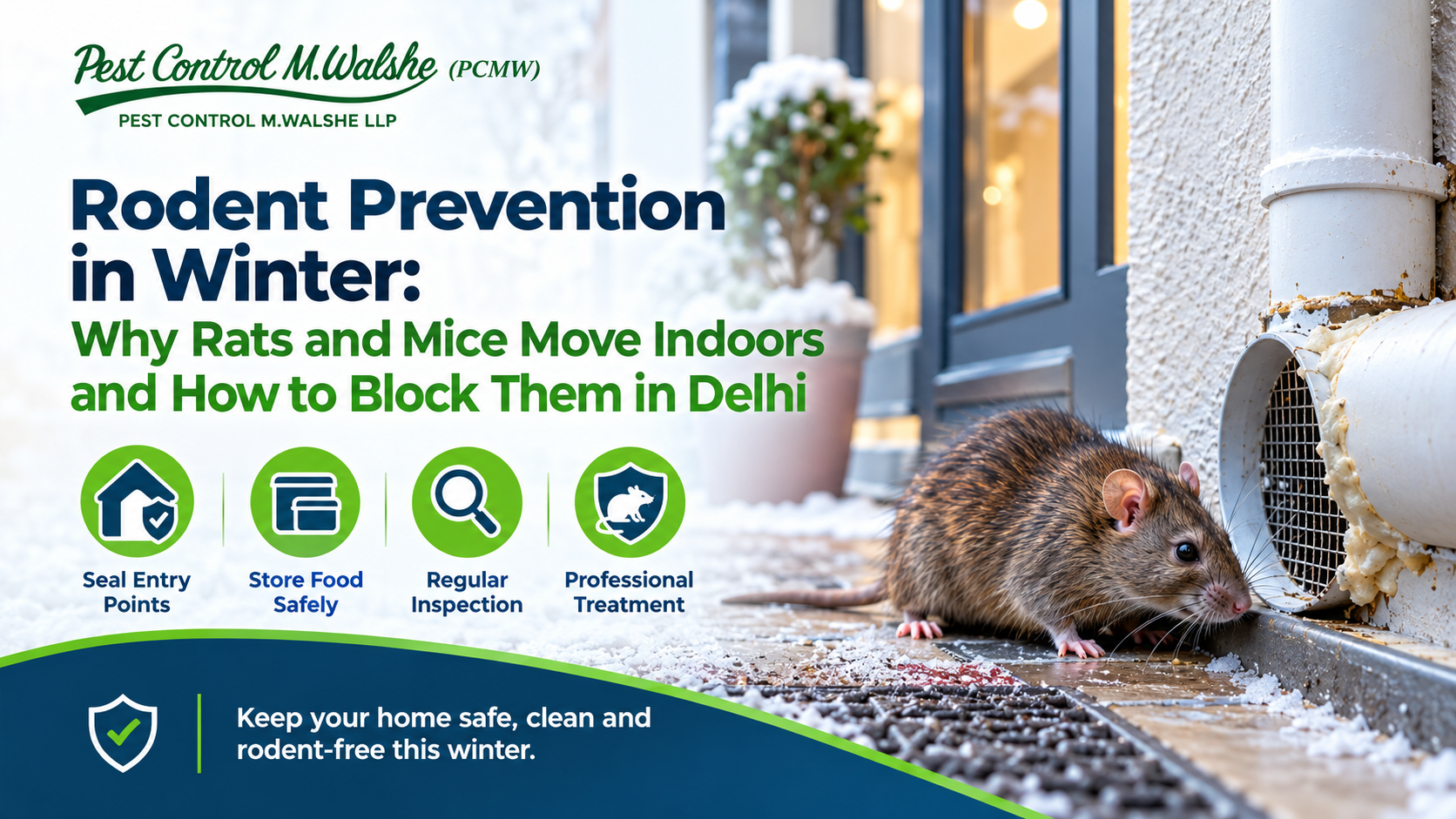
Objective
This blog explains why rats and mice move into homes when temperatures drop. It also gives Delhi NCR homeowners a clear, step-by-step plan to block them out before December.
Key Takeaways
- Why do rodents enter homes in winter? They want warmth, food and shelter. Rodents do not hibernate, so a warm house with an open gap is an easy target.
- How small a gap is enough? A mouse can pass through a gap the size of a dime (about 18 mm). A rat needs a gap the size of a quarter (about 24 mm).
- Where do they get in? Common routes in Indian homes are AC pipe cut-outs, kitchen chimney vents, drain pipes, gaps under the main door and loose electrical conduits.
- What works best? Seal gaps with steel wool, cement or metal mesh, store food in airtight containers and keep storage off the floor.
- When should you start? October or early November, before the cold nights set in.
- When should you call a professional? Call when you see droppings, gnaw marks or hear night-time scratching for more than a week.
Rats and mice come inside in winter for the same reasons you stay in: warmth, food and a safe place to sleep.
They do not hibernate, and an open gap gives them all three. The National Pest Management Association (NPMA) reported in January 2026 that 17% of Americans encountered rodents in their homes in 2025, and warned that cold weather drives these pests indoors. It is a US survey, but the behaviour it describes is the same in Indian cities. Good rodent prevention in winter has to start before the first cold night, which in Delhi means now.
At Pest Control M WALSHE LLP (PCMW), we have handled rodents in homes, factories and warehouses since 1956. This blog covers why rodents move in, where they get through and how to shut the door on them.
Why Do Rodents Enter Homes in Winter?
Rodents enter homes in winter to escape the cold and find food that is easy to reach. Your house offers heat, shelter and a kitchen in one place.
Here is what pulls them in:
- Warmth: Wall cavities, false ceilings and the space behind a fridge or geyser stay warm all night.
- Food: Open atta bags, rice sacks, pet food and kitchen waste are an easy meal.
- Shelter from fog, damp and wind: A dry corner under a staircase beats a cold drain.
- Nesting material: Quilts, cardboard boxes, newspaper and cotton stuffing make a ready-made nest.
- Quiet, undisturbed spaces: Box beds, loft storage and unused rooms rarely get checked in winter.
Which Rodents Are Most Common in Delhi Homes?
Three species show up most often in Indian cities: the house mouse, the roof rat (black rat) and the lesser bandicoot rat.
- House mouse: Small, fast and happy to live inside kitchen cabinets.
- Roof rat: A strong climber that uses pipes, cables and parapet walls to reach upper floors.
- Lesser bandicoot rat: Larger and more aggressive, and often found near drains and ground-floor entrances.
Where Do Rats and Mice Get Into a House?
Most rodents enter through gaps around pipes, doors, vents and drains. They only need an opening about the size of a coin.
This table lists the most common entry points in Delhi NCR homes and flats.
| Entry Point | Why Rodents Use It | Fix |
| Gap around the split AC pipe cut-out | Wide, warm and rarely sealed after installation | Pack with steel wool, then seal with cement or silicone |
| Kitchen chimney exhaust vent | Direct path into a food area | Fit a one-way flap and 6 mm metal mesh |
| Gap under the main door | Easy for mice to slip through | Fit a door sweep with no visible gap |
| Drain and sewer pipes | Rats climb and swim through them | Fit non-return traps and cover open drains with mesh |
| Electrical and gas pipe conduits | Gaps follow the pipe into the wall | Seal with cement or metal collars |
| Balcony and terrace doors | Roof rats use cables and creepers to climb | Trim plants, fix the door gap and clear debris |
Recommendation: Do this inspection in daylight. Look for dark, greasy rub marks along walls and skirting. Rats follow the same path every night, and the oil from their fur leaves a trail.
How to Prevent Rats From Entering a House: A Seven-Step Plan
The most reliable way to prevent rats from entering a house is to close every gap and remove their food supply. Good rodent prevention in winter is mostly basic housekeeping done early.
Here is the plan we give our clients:
- Inspect the outside first. Walk the full boundary of your home, from ground level to the terrace. Look for gnaw marks, loose bricks and open pipe cut-outs.
- Seal gaps with the right material. Rodents chew through foam, plastic and wood. Use steel wool packed tightly, then cover it with cement, mortar or silicone. Expanding foam alone will not hold.
- Fit door sweeps. Keep the gap under any exterior door below 6 mm.
- Cover vents and drains. Use 6 mm galvanised wire mesh on exhaust vents, floor drains and rainwater pipes.
- Store food properly. Keep atta, rice, dal and pet food in steel or glass containers with tight lids. Empty the kitchen bin every night.
- Raise and sort storage. Keep quilts, boxes and old clothes in sealed plastic or metal trunks, off the floor.
- Cut back access routes. Trim branches and creepers that touch walls. Fix leaking taps, because rodents also need water.
How Early Should You Start Rodent Prevention in Winter in Delhi NCR?
Start in October or early November, before night temperatures fall. Rodents begin exploring for winter shelter well before the cold arrives, so early sealing gives you the biggest advantage.
Use this simple timeline:
- October to mid-November: Inspect and seal. Clear out storage rooms before you pull out winter clothes.
- Late November to December: Switch to sealed storage for quilts and woollens. Check kitchens and pantries weekly.
- December to January: Look for fresh droppings and gnaw marks every week, especially behind appliances.
- February: Re-inspect the outside. Rodents often breed in late winter, so any gap you missed matters more now.
Example: A situation we see often in Noida and Gurgaon flats goes like this. A family takes a quilt out of a box bed in December and finds shredded cotton and droppings inside. The rats had come in weeks earlier through the unsealed gap around the AC pipe. A 20-minute sealing job in October would have prevented it. If you live in these areas, our teams cover Noida, Gurgaon and Delhi.
What Are the Signs That Rodents Are Already Inside?
The clearest signs are droppings, night-time scratching and gnaw marks. If you notice any of these, rodents are already living in your home.
- Droppings: Small, dark and pellet-shaped, usually near food, behind appliances or along walls. Soft, dark droppings are fresh. Hard, dry ones are older.
- Scratching or scurrying: Usually heard at night from walls, ceilings or under floors.
- Gnaw marks: On wires, food packets, soap, wood and plastic.
- Shredded nesting material: Paper, cloth or cotton in hidden corners.
- Greasy rub marks: Dark smears along skirting boards and pipe edges.
- A stale, musky smell: Common in closed storage rooms.
Fact: Rodents can cause serious structural damage by chewing through wood and electrical wiring, which raises the risk of electrical fires. Their droppings and urine can also spread diseases such as salmonellosis and leptospirosis.
Recommendation: Do not sweep dry droppings. Wear gloves and a mask, wipe with a damp cloth and disinfect the area.
Should You Handle Rodents Yourself or Call a Professional?
You can handle sealing and food storage yourself. Call a professional when signs persist for more than a week, or when you do not know where the rodents are getting in.
| Task | DIY | Professional |
| Sealing visible gaps | Works well | Faster, with proper materials |
| Finding hidden entry points | Difficult | Trained inspection of roof, drains and wall cavities |
| Baiting and trapping | Hit-or-miss, and risky around pets and children | Controlled bait stations and targeted treatment |
| Ongoing monitoring | Rarely sustained | Scheduled follow-up visits |
| Repeat problem | Rarely solved | Root-cause analysis |
Expert view: Peppermint oil, mothballs and strong smells may annoy rodents for a day or two. They do not stop them from coming in. Sealing and sanitation do the real work.
If you are dealing with a recurring rodent infestation, the cause is almost always a missed entry point or a food source nobody noticed. Our rat control services start with a full inspection. Our PCMW technicians then use bait stations, rodenticides and sealing techniques to cut off activity and stop it from coming back. We work under a “No Cure, No Pay” policy. For urgent rodent cases, we try to provide service the same day or the next day.
What Affects the Cost of Rodent Control?
There is no single price for rodent control, because every property is different. The cost depends on the following:
- Size and type of property (flat, independent house, shop or warehouse)
- How severe the infestation is
- Number of entry points that need sealing
- Number of follow-up visits required
PCMW publishes fees upfront, with no hidden charges or last-minute additions. Compare that to the cost of ignoring the problem: chewed wiring, spoiled grain and a repair bill that grows every week.
Ready to Rodent-Proof Your Home Before the Cold Arrives?
Our team can inspect your property, find every entry point and give you a clear plan. Call PCMW on +91-22-22850615 or book an inspection online. Early action costs less than repairs.
Seal the Gaps Before the First Cold Night
Rodents are looking for a way in right now. A gap you seal this week will not be a problem in January. Start with the outside walls, the AC pipe cut-out and your food storage. These three steps make the biggest difference for rodent prevention in winter in Delhi homes.
If rodents are already inside, Pest Control M WALSHE LLP can inspect, treat and seal your property. Call PCMW on +91-22-22850615 or contact us here before the cold sets in.
Faq’s
Do Rats and Mice Really Come Inside More in Winter?
Yes. Rats and mice look for warmth, food and shelter when temperatures drop, and homes provide all three. They stay active all winter because they do not hibernate.
How Small a Hole Can a Rat or Mouse Get Through?
A mouse can squeeze through a gap the size of a dime, about 18 mm. A rat can fit through one the size of a quarter, about 24 mm. If you can fit a finger into a gap, treat it as an entry point.
What Smell Keeps Rats Away From the House?
Strong smells like peppermint oil or cloves may bother rats for a short time, but they do not keep them out. Sealing gaps and securing food works far better than any smell.
Can Rats Enter Through AC Pipes and Drains?
Yes. The gap around a split AC pipe is one of the most common entry points in Indian homes. Rats also climb and travel through drain and sewer pipes, so cover open drains with mesh and fit non-return traps.
How Long Does It Take to Get Rid of Rats Once They Are Inside?
It depends on the size of the infestation. Mild cases may show improvement within a few days. Heavier infestations often need treatment and monitoring for several weeks.